

Introduction: Nobody Wants to Wait Months for an Office Anymore
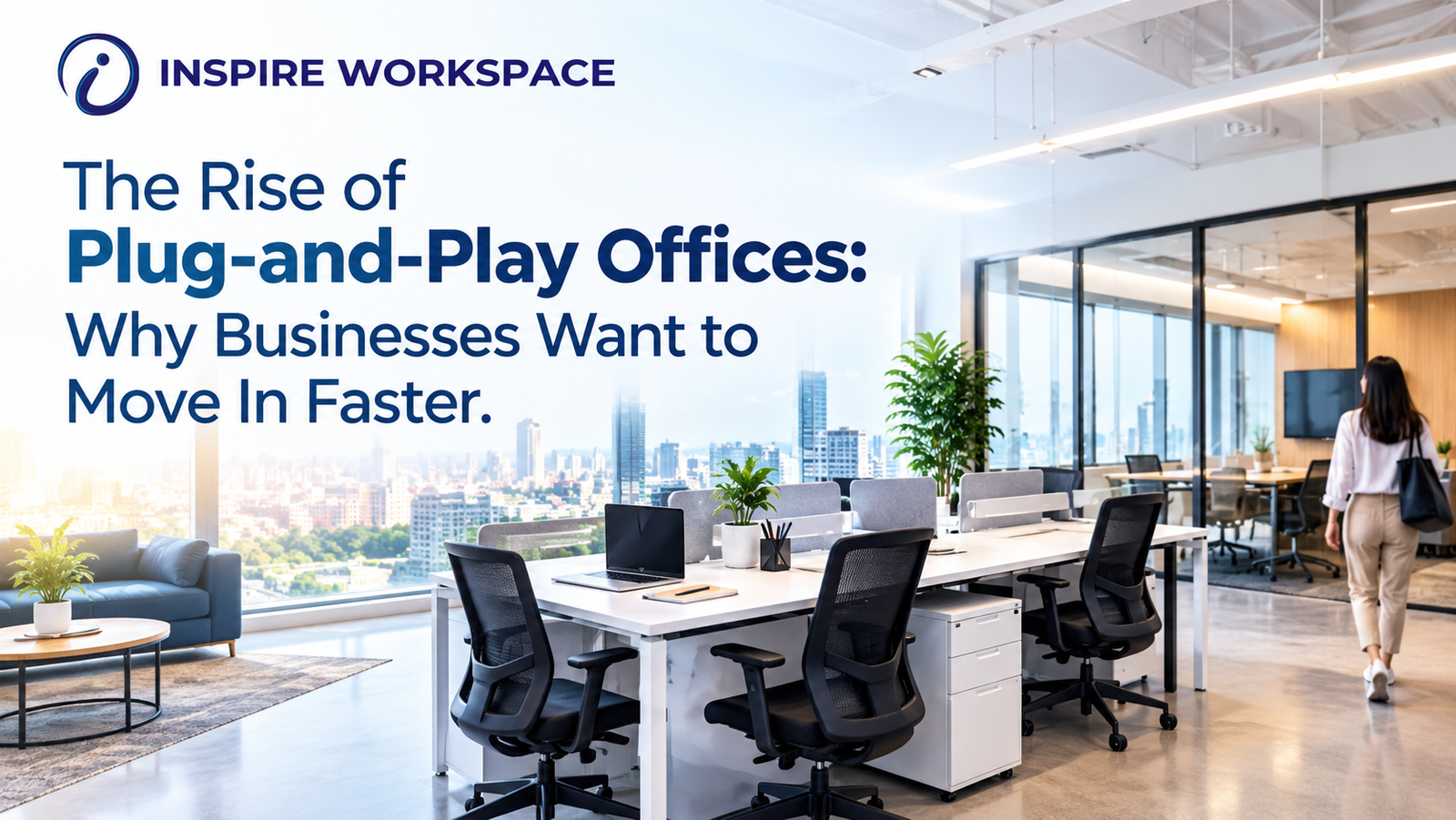
Plug and Play Office Space has changed the way businesses approach office setup. Instead of spending months finding a property, designing interiors, buying furniture, installing internet, and arranging essential facilities, businesses can move into a professionally furnished office and start operating much sooner.
You’d find a property, design the interiors, buy furniture, get the internet installed, sort out the electrical work, build meeting rooms, set up a reception desk, and hire someone to maintain the place. By the time all of that actually came together, weeks — sometimes months — had already gone by.
Businesses don’t run on that timeline anymore.
A startup opening its first office, a company expanding into a new city, or a team simply adding more people to the payroll — none of them want to sit around for months before they can actually get to work.
That’s exactly why plug-and-play offices have taken off.
The pitch is refreshingly straightforward: find the right space, move in, and start operating almost immediately.
1. What Is Plug and Play OfficeSpace and How Does It Work?
A plug-and-play office is a workspace that shows up ready to use, with most of the infrastructure a business needs already in place.
Depending on the provider, that usually includes:
- Workstations and desks
- Office chairs
- Private cabins
- Meeting rooms
- Conference rooms
- Reception areas
- High-speed internet
- Power backup
- Air conditioning
- Housekeeping
- Security
- Common areas
Rather than starting from an empty shell of a commercial space, a business simply walks into an environment built for day-to-day work.
That’s exactly why the model appeals so much to companies chasing speed and flexibility over anything else.
2. Why Speed Has Become Non-Negotiable
Time itself has turned into a business resource companies guard closely.
When a company is hiring, entering a new market, or opening a fresh branch, every week lost to office setup chips away at the bigger plan.
A ready-to-use office sidesteps most of those delays.
Traditional setup usually looks like this — Property → Design → Interiors → Furniture → Internet → Infrastructure → Operations
Plug-and-play setup looks more like this — Choose space → Complete formalities → Move in → Start operating
The exact timeline still depends on the provider and what the business actually needs, but the gap in complexity between the two paths is hard to ignore.
3. Less Hassle Right from the Start
Building an office out of an empty commercial property means juggling a lot of moving parts at once.
Businesses typically end up coordinating with interior contractors, furniture vendors, internet providers, electrical contractors, IT teams, maintenance staff, and security vendors — often all at the same time.
A plug-and-play office bundles most of that into a single workspace solution.
That doesn’t automatically mean every business spends less money overall. What it does mean is a serious cut in the time, coordination, and upfront effort the setup demands.
4. Flexibility Has Become the Real Selling Point
Business needs shift fast.
A company might start with 10 employees and cross 25 within a year. Another might just need a temporary office while it figures out where to put down permanent roots.
A standard office lease rarely bends enough to keep up with either situation.
Plug-and-play and managed office setups, by contrast, tend to offer a range of configurations depending on the provider — dedicated desks, private cabins, small team offices, spaces for 20-plus seats, larger team setups, and standalone meeting rooms.
That variety lets a business pick a setup that actually matches where it stands right now, instead of forcing a fit.
5. Built for Teams That Are Growing Fast
Growth creates its own strange office-space dilemma.
You don’t want to rent a space so big it swallows your current team. But you also don’t want to pack up and move every time you bring on a few new hires.
That’s where scalability earns its keep.
A flexible office provider will often let a business expand into more seats or additional space as the team grows, without triggering a full relocation.
Today — 15 seats
Tomorrow — 25 seats
Later — 40+ seats
The office grows in step with the business, rather than forcing the business to plan around the office.
6. Chennai Businesses Are Chasing Faster Solutions
Chennai’s business landscape spans technology, IT services, automotive, finance, healthcare, manufacturing, startups, and professional services — and as these companies expand, their office needs have gotten a lot more varied.
Some just need a small private office. Others need 20, 30, or 40-plus seats. Some want meeting rooms built for client visits. Others need a proper reception area to greet visitors.
Instead of spending months building all of this from the ground up, more businesses are turning to ready-to-move office spaces in Chennai that already have the infrastructure sorted.
7. Speed Shouldn’t Come at the Cost of a Good Workplace
Moving fast doesn’t mean cutting corners on the actual experience of working there.
Employees spend a large chunk of their day inside that office, so it still needs to feel practical and comfortable — not just quick to move into.
That means paying attention to ergonomic furniture, good lighting, dependable internet, a comfortable temperature, real collaboration space, clean common areas, and easy accessibility.
A plug-and-play office earns its reputation only when speed and workplace quality show up together.
8. A Professional Image, Without the Long Build-Out
For companies that regularly host clients, investors, partners, or job candidates, the office itself shapes a first impression before a single word gets said.
A ready-to-use professional space usually comes with a proper reception, visitor seating, meeting rooms, private cabins, and conference facilities already built in.
That lets a growing company put its best foot forward — without spending months constructing that impression piece by piece.
9. Plug and Play vs. Traditional Office Setup
| Factor | Traditional Office Setup | Plug-and-Play Office |
| Setup time | Usually longer | Usually faster |
| Interior work | Often required | Already prepared |
| Furniture | Needs to be arranged | Generally available |
| Internet setup | Separate coordination | Often available |
| Flexibility | Depends on lease | Often higher |
| Expansion | May require relocation | Can be easier |
| Management effort | Higher | Lower |
| Initial planning | More involved | Simpler |
Which one makes sense really comes down to budget, lease preferences, branding needs, team size, and how far ahead the company is planning.
10. Who Benefits From Plug and Play OfficeSpace?
Startups — get a professional office without burning months on setup.
Growing companies — can keep adding seats as their headcount climbs.
New branches — get an operational base up and running fast when entering Chennai.
Remote-first teams — get flexible space for meetings and occasional collaboration.
Project teams — avoid sinking money into permanent infrastructure for short- or medium-term work.
Small and mid-sized businesses — get access to professional facilities without managing every operational detail themselves.
11. What to Check Before You Sign
Not every plug-and-play office will suit every business, so it pays to check a few things before signing anything.
Location — Does it actually work for your employees and clients?
Connectivity — Can people reach it easily by public transport or the main roads?
Internet — Is the connection genuinely fast and reliable?
Power backup — What happens the moment the power goes out?
Seating — Does it comfortably fit your team now, and room to grow later?
Meeting rooms — Are they actually available when you need them, not just on paper?
Privacy — Can you get private cabins or a dedicated team area if the work calls for it?
Security — What access-control and security measures are actually in place?
Housekeeping — Who’s responsible for keeping the place running day to day?
Agreement terms — Read the fine print on the rental period, deposits, extra charges, expansion options, and exit terms before you commit.
12. The Office Is Turning Into a Service, Not Just a Property
The whole idea of what an office is has quietly shifted.
Businesses don’t want to spend their time managing furniture, infrastructure, maintenance, and setup logistics anymore. They’d rather put that energy into actually running the business.
That’s a big part of why flexible and managed office models keep gaining ground.
The office itself is becoming more of a service you subscribe to than a physical property you build and maintain. A business picks the space it needs, uses the infrastructure that’s already there, and adjusts as the team changes shape.
Conclusion: Move Faster Without Starting From Zero
The rise of plug-and-play offices comes down to one simple shift in priorities:
Companies want to spend less time setting up a workplace and more time building the business itself.
For startups, expanding companies, new branches, and fast-growing teams, a ready-to-use office turns what used to be a months-long headache into a much smoother transition.
The real advantage isn’t just the desks and chairs waiting on day one.
It’s the ability to start sooner, cut through setup complexity, and build a workplace that can keep pace with the business as it grows.As Chennai’s business scene keeps evolving, plug-and-play offices look set to stay a go-to option for companies that want speed, flexibility, and genuine convenience