
Introduction
A professional office doesn’t have to be an expensive one. SMEs can look established, keep their team comfortable and leave room to grow by spending only where it counts.
For a small business, looking credible can feel like a costly exercise. Clients want to see a company that is reliable and established, your team needs a space where it can do its best work, and every rupee spent on rent, interiors and infrastructure is a rupee not spent on growth.
The good news is that SMEs have more flexible options today than ever before. You can choose a right-sized workspace, move into a ready-to-use office and pay only for the facilities your operations genuinely need.
The goal isn’t the biggest office in the building. It’s a professional image, a practical environment and room to grow, without unnecessary spending.
Why Your Office Image Matters
For many clients, your office is the first physical touch-point with your business. A clean reception, organized workstations and a proper meeting room tell them, within minutes, how seriously you run your company.
That doesn’t require lavish interiors or a corporate headquarters. A small office that is well planned, tidy and well maintained will usually leave a stronger impression than a larger one that is poorly used. For an SME, the aim is credibility without the overheads.
10 Smart Ways to Build a Professional Office on a Budget
1. Choose the Right Office Size
The simplest way to control costs is to match your space to your actual team. If you have eight people, an office built for twenty means paying every month for desks nobody sits at.
Before you decide, ask yourself:
- How many employees do we have today, and how many might we add in the next 12 months?
- Do we need private cabins, or will open workstations do?
- How often do clients visit?
- Do we need a dedicated meeting room?
- How much common space do we really need?
Right-sizing lowers rent and running costs from day one, and you can always expand when the team does.
2. Don’t Overspend on Interiors
Professional doesn’t mean expensive. Instead of elaborate interiors, aim for a space that is clean, comfortable and functional. A few simple choices do most of the work:
- Comfortable furniture
- Good lighting
- Clean walls and flooring
- Organised desks
- Professional signage
- A neat reception area
Spend on what people see and feel, not on decoration for its own sake.
3. Consider a Ready-to-Move Office
Fitting out an empty commercial space can take weeks and a large amount of capital: furniture, electrical work, internet, interiors, meeting areas and more, all arranged before your team can sit down.
A ready-to-move office removes most of that. Your team walks into an equipped, professional environment and gets on with the business instead of managing a fit-out. For a growing SME, that means a smaller upfront investment and a much faster start.
4. Make Meeting Facilities Flexible
A good meeting room matters when you host clients, candidates, partners or investors. But does your business need a large conference room sitting empty most days? Probably not.
Flexible meeting and conference facilities let you book a professional space when you need it, without giving up a big part of your office to a room that is rarely used. It’s a practical way to look established while using your space efficiently.
5. Invest in What Your Team Actually Uses
It’s easy to spend on things that look impressive but add little to daily work. Your team will notice reliable internet, comfortable workstations, air conditioning, power backup and a clean environment far more than any decorative feature.
Before spending on anything, ask: does this improve the experience of our employees or clients? If yes, prioritize it. If not, the money is probably better used elsewhere in the business.
6. Use Branding Strategically
Your office should reflect your brand, but your logo doesn’t need to be on every wall. A few well-planned touches are enough to build a strong identity:
- A professional reception sign
- Your company logo
- Brand colours
- A simple feature wall
- Branded meeting-room signage
Small, consistent details make an office feel established without a large design budget.
7. Look Beyond Monthly Rent
Rent is only one line in the budget. The real cost of an office also includes:
- Security deposit
- Electricity
- Internet
- Maintenance and housekeeping
- Furniture and repairs
- Office equipment
- Meeting facilities
Compare options on the total cost of operating the office. A workspace that bundles several essentials can offer better value than a cheaper one where you arrange and pay for everything separately.
8. Choose Flexibility as Your Business Grows
Requirements change quickly. A company with five employees today could have fifteen next year, or hiring plans and market conditions could shift unexpectedly. A long-term lease may not suit a growing SME.
Co-working spaces, managed offices and flexible private offices let you pick space for your present needs and adjust as you develop, so you don’t end up paying for space you no longer use.
9. Choose a Location That Works for Your Business
A professional office is about more than what’s inside the building. A location that is easy for employees and clients to reach makes meetings simpler and the whole business experience smoother.
Look for good road connectivity, nearby public transport and metro access. A well-connected address can give an SME a professional presence without the cost of a corporate headquarters.
10. Remember That Professionalism Is More Than Appearance
Expensive furniture, attractive interiors or a prestigious address don’t make an office professional on their own. How it functions matters just as much:
- Can visitors find the reception easily?
- Is there a comfortable place for client discussions?
- Is the internet reliable?
- Is the office clean and organized?
- Can employees focus on their work?
These practical details often shape the experience more than expensive decor.
Quick Checklist Before You Commit
- Is the space sized for today’s team, with room to grow?
- Do we know the total monthly cost, not just the rent?
- Are internet, power and cooling reliable?
- Can we access a professional meeting room when needed?
- Can we scale up or down without heavy penalties?
- Is the location easy for clients and employees to reach?
Why Managed Office Spaces Can Be a Smart Choice for SMEs
A traditional office setup ties up a significant amount of capital. That money could instead go into hiring, marketing, technology or sales, the areas that directly drive growth.
This is why many SMEs are turning to managed offices, coworking spaces and ready-to-move private offices. You get professional infrastructure without handling every part of the setup yourself, a useful balance of professional presentation, convenience and cost control.
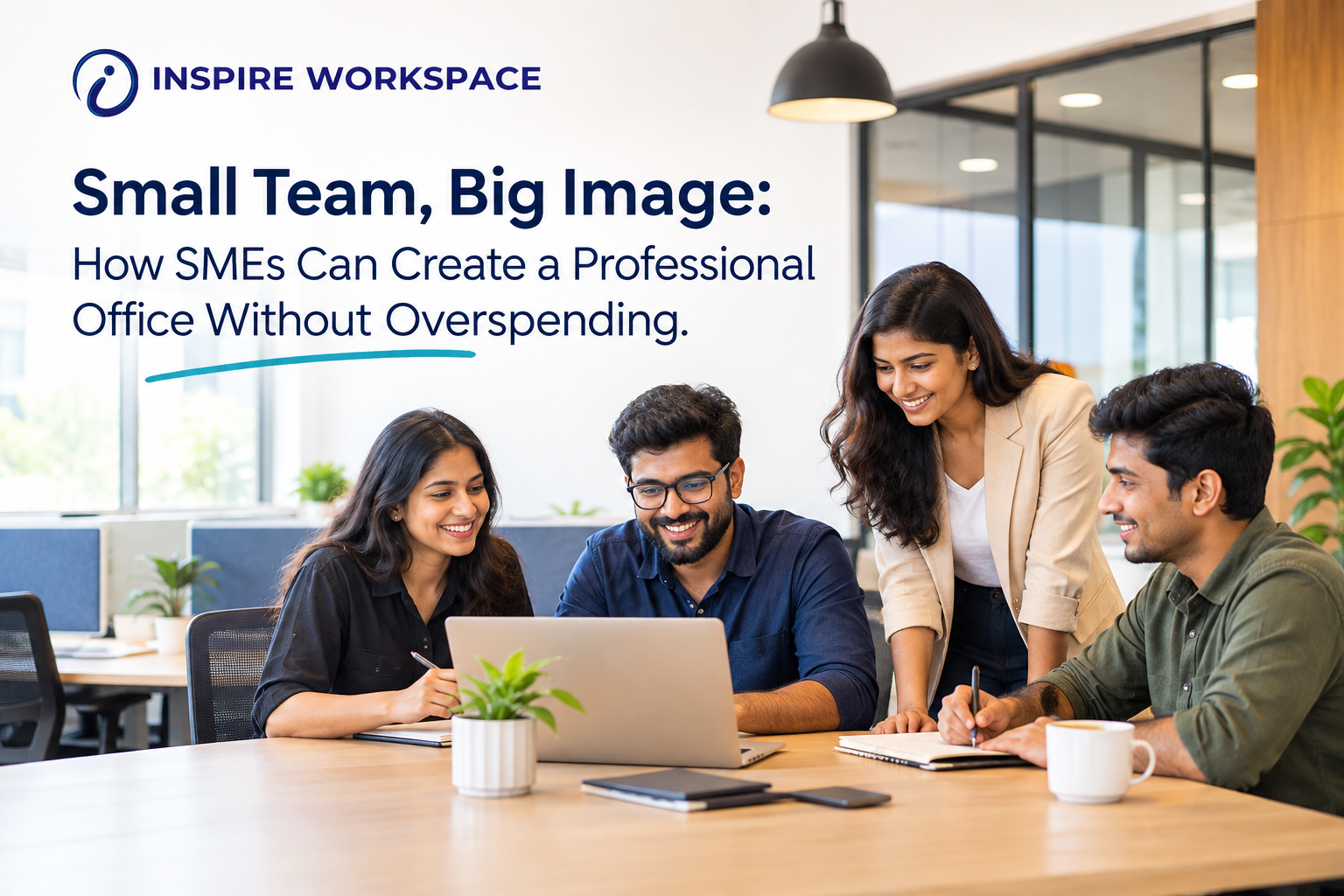
Small Team, Big Image
A small team doesn’t mean a small-looking business. Whether you have five, ten or fifteen people, you can run a professional office, welcome clients with confidence and give your team an environment that supports them.
The key is to spend strategically. Rather than copying an expensive corporate office, focus on what truly matters: the right location, comfortable workstations, professional meeting facilities, reliable infrastructure and a well-kept environment. Your office should support your business, not become a financial burden.
Conclusion
Building a professional office on a limited budget isn’t about cutting corners. It’s about making smarter decisions about where your money goes.
Choose the right amount of space, skip unnecessary interiors, prioritise essential facilities and consider flexible workspace options. A ready-to-move or managed office can also cut the time, effort and upfront investment of a traditional setup.
A professional image doesn’t come from the size or price of your office. It comes from how thoughtfully the space is planned and how confidently your business operates in it.A small team can make a big impression with the right space, the right environment and the right strategy. For SMEs, the smartest office isn’t the most expensive one. It’s the one that keeps employees comfortable, gives clients confidence and leaves enough budget for the business to keep growing.