inspire office space wp

office space

Vadapalani vs Guindy vs Teynampet office locations comparison for businesses in Chennai
Blog, CEO SPEAKS, Coworking events in Chennai, Coworking Space, Flexible Office Space in Chennai, Furnished Office Space, Inspire Coworking, Inspire Office Space, Meeting Room, Renting office space in chennai, Shared Office Space

Vadapalani vs Guindy vs Teynampet: Which Office Location Is Right for Your Business?

Picking an office address in Chennai is never just about square footage and rent per square foot. It’s about who your employees are, who your clients are, and how the city’s traffic patterns will shape your team’s daily life. Three localities come up again and again in this conversation: Vadapalani, Guindy, and Teynampet. Each has a distinct personality, price point, and business profile — and the “best” one depends entirely on what your company actually needs. This guide breaks down all three so you can make a decision with confidence, not guesswork. Quick Snapshot Factor Vadapalani Guindy Teynampet Best for Startups, SMEs, cost-conscious teams IT/ITES, mid-to-large corporates, industrial-adjacent businesses Corporate HQs, finance, consulting, client-facing firms Rent range Budget to mid-range Mid to high High to premium Metro connectivity Yes (Vadapalani Metro) Yes (Guindy Metro + MRTS + suburban rail) Nearby via Nandanam/Teynampet stretch, strong road access Airport proximity Moderate Excellent (closest of the three) Moderate Vibe Commercial, residential mix, buzzing market street Industrial-turned-IT hub, corporate campuses Polished, upscale, corporate boulevard Vadapalani: The Budget-Friendly, Well-Connected Choice Vadapalani sits in central-west Chennai, right along Arcot Road, and has long been known as a busy commercial and residential neighborhood rather than a dedicated business district. That’s actually part of its appeal for smaller companies. Why businesses choose Vadapalani: Where it falls short: Best fit: Startups, small and mid-sized enterprises, back-office teams, training institutes, and any business prioritizing cost control and city-wide accessibility over prestige. Guindy: The Industrial-to-IT Powerhouse Guindy has transformed from an industrial estate into one of Chennai’s most important commercial and IT corridors. It sits close to the airport and is a well-established address for both legacy manufacturing-linked businesses and modern tech companies. Why businesses choose Guindy: Where it falls short: Best fit: IT and ITES companies, engineering and manufacturing-linked businesses, mid-to-large corporates that need strong transport links (especially to the airport), and companies wanting an established commercial-hub address. Teynampet: The Premium Corporate Address Teynampet, part of Chennai’s central business corridor along Anna Salai and near Nungambakkam and Alwarpet, is where a lot of Chennai’s corporate and consulting firms choose to set up shop. It’s less about cost and more about prestige, polish, and centrality. Why businesses choose Teynampet: Where it falls short: Best fit: Corporate headquarters, consulting and finance firms, legal practices, and any business where a polished, high-visibility address adds real value to client relationships. How to Decide: Match the Location to Your Business Stage Vadapalani works best if you’re early-stage or watching costs closely. You still get flexible space, dependable connectivity, and a fairly central location — just without the premium-district price tag. If you’re in IT, engineering, or logistics, Guindy is probably the stronger fit. Airport proximity, multiple transit options, and an already-established commercial ecosystem make it worth the higher rent, provided your budget can absorb it. For businesses that are client-facing, corporate, or need to impress investors, Teynampet makes the most sense. The address itself carries weight, and if that prestige and central positioning matter to how your business is perceived, the premium becomes justified rather than wasted. Other Factors Worth Weighing Beyond rent and reputation, a few practical questions can tip the decision: Final Word There’s no universally “right” answer between Vadapalani, Guindy, and Teynampet — only the right answer for your business’s stage, budget, and priorities. Vadapalani wins on affordability and flexibility, Guindy wins on connectivity and established infrastructure, and Teynampet wins on prestige and centrality. Match the location to what your business actually needs to run and grow, and the office address will work for you instead of against you. Rents and availability change frequently across all three localities, so it’s worth getting current quotes from a local commercial broker before finalizing your decision.

Meeting room etiquette and booking guide for Chennai startups
Blog, CEO SPEAKS, Coworking events in Chennai, Coworking Space, Flexible Office Space in Chennai, Furnished Office Space, Inspire Coworking, Inspire Office Space, Meeting Room, Renting office space in chennai, Shared Office Space

Meeting Room Etiquette & Booking Guide for Chennai Startups

Introduction A meeting room says more about your startup than your pitch deck does. Before a client hears a single word from you, they’ve already noticed whether the room was ready, quiet, and professional — or scrambled together at the last minute. For early-stage founders in Chennai, getting meeting room booking right isn’t just a logistics task. It’s part of how you’re perceived. This guide covers exactly how to book a meeting room in Vadapalani, what etiquette actually matters once you’re in the room, and the small mistakes that quietly cost startups credibility. Why Meeting Room Booking Matters for Startups Most early-stage teams don’t have a dedicated office manager. That means booking logistics — room size, AV setup, timing — often fall to whoever’s running the meeting. Get it wrong, and you’re troubleshooting a projector cable while your investor waits. Get it right, and the meeting starts on your terms. The Credibility Advantage of a Rented Meeting Room A properly booked, well-equipped coworking meeting room in Chennai also solves a problem most startups don’t talk about openly: not having a “real” office to invite clients to. A rented boardroom for an hour costs a fraction of a long-term lease and removes that awkwardness entirely. How to Book a Meeting Room in Vadapalani: Step-by-Step 1. Decide the meeting type first, then the room.A one-on-one investor call needs a small, private cabin with strong Wi-Fi. A client pitch or board review needs a boardroom-style setup with a display screen and seating for the full group. Booking based on headcount alone often leads to rooms that are the wrong shape for the conversation. 2. Check availability and lock the slot early.In business hubs like Vadapalani, peak slots — late morning and early afternoon — fill up fastest, especially around month-end when most companies run reviews. Book at least 24–48 hours ahead for anything client-facing. 3. Confirm what’s included before you commit.Not every “meeting room” comes with the same amenities. Before booking, confirm the display or projector setup, video conferencing equipment, whiteboard access, refreshments, and reception support to receive your guests. 4.Ask about buffer time. Meetings run over. Find out whether your booking includes a grace period or whether consecutive bookings will require you to leave as soon as your slot ends—this will influence how you plan the conversation. 5.Obtain a confirmation that includes your room number and the instructions regarding access. This is especially important when your guests are visiting for the first time. Provide the parking information, the specific floor and room, and also give a contact number in case they are unable to locate the entrance. The following etiquette rules for meeting rooms should be observed by every startup. Correctly booking the room is half the task. The other half consists of what takes place within it. Get there earlier than your guests do. If you arrive at the room between 10 and 15 minutes early, you’ll have the opportunity to check the screen, make adjustments to the lighting, and get used to your surroundings — rather than having to set everything up while your client is watching. Leave the room in exactly the same condition as when you first entered it. Clean the cups, wipe the whiteboard, and put the chairs in. It goes beyond mere courtesy since in a shared coworking space the next person’s booking usually starts immediately after yours, and frequent late handovers can negatively impact your account status. Make sure the phones are on silent and go out when you receive a call. Obvious, but frequently ignored. The professionalism you are aiming to show will be damaged if someone rings the phone or if there is a remark from another person during a meeting with a client. Respect the booked duration. Running over takes up someone else’s time. If you expect a meeting to run long, book extra time in advance instead of extending it on the spot. Tell your guests about it before they come. Send guests a short message with the exact location, floor, and any ID or sign-in requirements at reception. This stops them from wandering the lobby looking for you, and it helps you avoid an unprofessional first impression. Before the meeting begins, not during it, check the technology. Make sure to connect your laptop, check the video call link, and verify the audio five minutes before your guests arrive. When drafting a formal piece, avoid placing a preposition at the end of a sentence. The need to carry out troubleshooting in a live session with a client can cause a quick drop in the effectiveness of your pitch.  Common Mistakes Startups Make When Booking Meeting Rooms Why Booking Matters for Growing Startups It gives your startup a cheap way to behave and look like a bigger company — as long as you plan the booking process carefully instead of arranging it on the spot. Book Your Meeting Room in Vadapalani If you need a meeting room in Vadapalani with a reliable audiovisual setup, fast Wi-Fi, and the option to book by the hour or half-day, take a look at Inspire Office Space’s meeting rooms. Need More Than Just a Room? If your team needs more than just a room for a few hours, consider our coworking spaces in Chennai instead. Conclusion:- Final Thoughts Chennai startups without a boardroom gain a real edge by knowing how to book and use a meeting room well. It’s a cheap way to look like a bigger company — if you plan the booking instead of arranging it last-minute. Need a meeting room in Vadapalani with reliable AV, fast Wi-Fi, and hourly or half-day booking? Check out Inspire Office Space’s meeting rooms, or explore our coworking spaces in Chennai for longer team needs.

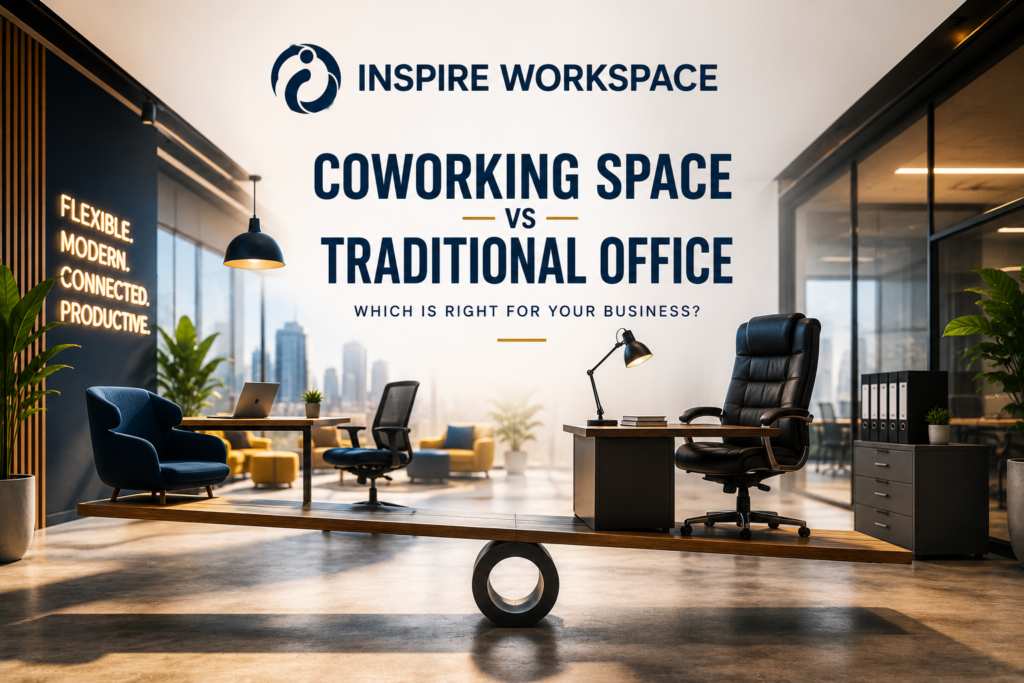
Co-working space vs traditional office comparison showing flexible workspaces, private cabins, and modern office facilities.
Blog, Coworking events in Chennai, Coworking Space, Flexible Office Space in Chennai, Furnished Office Space, Inspire Coworking, Inspire Office Space, Meeting Room, Renting office space in chennai, Shared Office Space

Co-working Space vs Traditional Office: Which Is Better for Your Business?

To determine which workspace delivers the greatest value, it is important to compare the benefits and limitations of each option. Comparing both workspace solutions allows businesses to select an environment that delivers long-term value and efficiency Let’s compare both. What Is a Traditional Office? A traditional office involves renting a dedicated commercial space exclusively for your business operations. This model gives businesses complete control over office design, branding, layout, and daily operations. Despite its advantages, a traditional office setup involves additional operational and administrative requirements, including: Office setup and interior design Traditional offices are often suitable for organizations that require complete privacy, customization, and long-term operational stability. What Is a Co-working Space? A co-working space is a fully managed workspace where businesses can begin operations immediately without handling setup or maintenance. Most co-working spaces typically include: ✔ Fully furnished workstations✔ High-speed internet✔ Meeting and conference rooms✔ Reception support✔ Housekeeping services✔ Security management✔ Utility management As a result, businesses can dedicate more time and resources to innovation, customer engagement, and long-term growth. Co-working Space vs Traditional Office: Key Comparison 1. Cost Efficiency Among all decision-making factors, cost remains one of the key considerations when choosing the right workspace Traditional Office Costs: Co-working Space Costs: For startups and small businesses, co-working spaces can improve cash flow and reduce financial pressure. 2. Flexibility and Scalability Business requirements evolve quickly. Traditional offices often require long-term commitments and may become too large or too small as teams change. Co-working spaces allow businesses to: This flexibility makes co-working an attractive solution for growing businesses. 3. Professional Business Environment A professional office environment influences how clients and partners perceive your brand. Modern co-working spaces provide: This enables companies to maintain a professional image without large capital investment. 4. Productivity and Collaboration Workspace design directly impacts performance. Traditional offices provide privacy and complete control. Co-working spaces create opportunities for: Many businesses build valuable partnerships simply by working in shared professional environments. 5. Reduced Administrative Work Managing an office requires time and resources. Traditional offices often involve handling: Co-working spaces remove these operational burdens so businesses can focus on customers, projects, and growth. Which Option Is Better? Traditional Office may be ideal for: ✔ Large enterprises✔ Businesses requiring complete customization✔ Organizations needing long-term fixed operations Co-working Space may be ideal for: ✔ Startups✔ Freelancers✔ Consultants✔ Remote teams✔ Growing businesses✔ Small and medium enterprises Benefits include: Conclusion Workspaces are evolving, and businesses increasingly prioritize flexibility, efficiency, and scalability. While traditional offices remain valuable in certain situations, co-working spaces provide a modern solution that helps businesses operate efficiently and adapt quickly to changing needs. If you are looking for a professional workspace designed to support productivity and business growth, a co-working environment can be a practical choice. At Inspire Office Space, businesses can access co-working spaces, private cabins, meeting rooms, and managed office solutions designed to help teams work smarter and grow faster.

coworking space
Blog

Benefits of Choosing a Coworking Space Near Vadapalani Metro

In today’s fast-paced business world, flexibility, convenience, and collaboration have become essential for professionals and growing businesses. Whether you are a startup founder, freelancer, remote worker, or an established company, finding the right workspace can directly impact productivity and business growth. Choosing a coworking space near Vadapalani Metro in Chennai offers the perfect combination of accessibility, affordability, and professional infrastructure. With excellent connectivity and modern office amenities, Vadapalani has quickly become one of the preferred business locations in Chennai. Excellent Metro Connectivity One of the biggest advantages of working near Vadapalani Metro is seamless transportation. The metro provides easy access from key areas such as: Employees and clients can commute comfortably without worrying about heavy traffic or parking issues. A workspace near the metro station saves valuable travel time and improves work-life balance. Ideal Location for Startups and Businesses Vadapalani is emerging as a growing commercial hub with: A coworking space in this prime location gives businesses a professional image while keeping operational costs under control. Businesses can also benefit from nearby: This makes daily operations smoother and more convenient. Cost-Effective Office Solution Traditional office leases often require: Coworking spaces eliminate these challenges by offering: This makes coworking spaces a smart and affordable solution for startups and growing teams. Fully Furnished Professional Workspace Modern coworking spaces near Vadapalani Metro typically include: Businesses can start operations immediately without investing in infrastructure setup. Better Networking Opportunities Coworking spaces encourage collaboration and networking among professionals from different industries. Sharing a workspace with entrepreneurs, freelancers, and startups creates opportunities for: For startups and independent professionals, networking can play a major role in business growth. Increased Productivity and Motivation Working from home or crowded cafes can often lead to distractions and reduced efficiency. A professional coworking environment helps improve: The energetic atmosphere of a shared workspace can also increase motivation and creativity. Flexible Workspace Options Coworking spaces offer flexible solutions based on business needs, including: This flexibility allows businesses to scale easily as their team grows. Professional Meeting Spaces Meeting clients in a professional environment creates a strong business impression. Coworking spaces near Vadapalani Metro provide well-equipped meeting rooms suitable for: This adds credibility and professionalism to your business. Access to Modern Amenities Most premium coworking spaces provide additional amenities such as: These facilities help businesses operate smoothly while enhancing employee comfort. Why Choose Inspire Workspace? Inspire Workspace offers flexible and modern coworking solutions designed for startups, freelancers, and growing businesses in Chennai. Located in a strategic business area, Inspire Workspace provides: Its proximity to Vadapalani Metro makes commuting easy and convenient for teams and clients alike. Conclusion Choosing a coworking space near Vadapalani Metro is a smart decision for businesses seeking flexibility, affordability, and convenience. With excellent connectivity, modern infrastructure, and collaborative work environments, coworking spaces help businesses improve productivity and grow efficiently. Whether you are launching a startup, expanding your team, or searching for a professional office environment, Inspire Workspace provides the ideal workspace solution in Chennai. Section Title Benefits of Choosing a Coworking Space Near Vadapalani Metro Byinspiresales14 May 13, 2026 Blog In today’s fast-paced business world, flexibility, convenience, and collaboration have become… Read More Best Shared Office Space in Chennai for Startups and Businesses Byinspiresales14 May 7, 2026 Blog How Coworking Spaces Improve Networking and Collaboration Byinspiresales14 May 7, 2026 Blog Custom Dedicated Offices for Businesses Byinspiresales14 March 3, 2026 Blog Private Offices Designed and Built for Daily Productivity Byinspiresales14 February 28, 2026 Blog Dedicated Office Spaces for Growing Teams Byinspiresales14 February 25, 2026 Blog Coworking Spaces for Remote Teams: Bridging the Distance Byinspiresales14 February 20, 2026 Blog

Here’s How Shared Offices Benefit Your Business
Blog

Here’s How Shared Offices Benefit Your Business

Introduction The modern workplace is evolving, and businesses are shifting towards more flexible and cost-effective solutions. One such innovation is the concept of shared offices, which has gained significant popularity in recent years. Whether you’re a startup, a freelancer, or an established company, shared office spaces provide numerous benefits that can enhance productivity, collaboration, and cost savings. This blog explores the key advantages of shared offices and why they might be the perfect fit for your business. Cost Efficiency One of the most compelling reasons businesses opt for shared office spaces is cost efficiency. Renting a traditional office requires a significant upfront investment in infrastructure, utilities, maintenance, and office supplies. In contrast, shared offices come fully equipped with essential amenities like high-speed internet, office furniture, meeting rooms, and kitchen facilities. By sharing costs with other businesses, companies can significantly reduce operational expenses and allocate resources more efficiently. Increased Networking Opportunities Working in a shared office environment allows professionals from various industries to interact and collaborate. Unlike isolated corporate offices, shared spaces foster networking opportunities, making it easier to exchange ideas, find potential clients, or even collaborate on projects. This environment encourages innovation and opens doors to new business opportunities. Flexibility and Scalability Businesses today require agility, and shared office spaces offer unparalleled flexibility. Unlike long-term leases for traditional offices, shared spaces provide short-term rental options, allowing businesses to scale up or down based on their needs. Whether you’re a solo entrepreneur needing a desk or a growing startup requiring a dedicated team space, shared offices accommodate varying business requirements without long-term financial commitments. Access to Premium Amenities Shared office spaces often provide access to high-quality amenities that might be financially out of reach for small businesses in a conventional office setup. These include: Such facilities enhance the work experience and contribute to employee satisfaction and productivity. Boosted Productivity and Employee Satisfaction A dynamic work environment can lead to increased productivity and employee satisfaction. Unlike working from home, which can be isolating and full of distractions, shared offices offer a structured work setting with fewer interruptions. Many shared offices also incorporate ergonomic furniture, well-lit spaces, and communal areas that improve overall work efficiency and mental well-being. Professional Image and Credibility For small businesses and freelancers, maintaining a professional image is crucial for building credibility. Having a business address in a well-located shared office space enhances your brand’s reputation and provides a more professional setting for client meetings. Many coworking spaces also offer virtual office services, mail handling, and receptionist support, adding further credibility to your business. Access to a Collaborative Community Unlike traditional office spaces where interactions are limited to employees within the same company, shared office spaces encourage collaboration across diverse fields. Many coworking spaces host events, workshops, and networking sessions that bring professionals together, fostering a community-driven work culture. This collaborative environment can lead to mentorship opportunities, partnerships, and knowledge sharing. Reduced Administrative Burden Managing an office involves handling administrative tasks such as cleaning, security, IT support, and utility management. Shared offices take care of these responsibilities, allowing businesses to focus on their core operations. This convenience is particularly beneficial for startups and small businesses that may not have the resources to manage a traditional office setup efficiently. Environmental Sustainability Shared offices contribute to sustainability by reducing the carbon footprint associated with traditional office spaces. By sharing resources such as energy, water, and office supplies, businesses minimize waste and promote eco-friendly practices. Many coworking spaces incorporate green initiatives such as recycling programs, energy-efficient lighting, and sustainable building designs. Work-Life Balance For entrepreneurs and remote workers, shared office spaces offer a clear distinction between work and personal life. Unlike working from home, where boundaries can blur, shared offices create a dedicated workspace that enhances focus and productivity. Many spaces also provide wellness programs, recreational activities, and relaxation areas to promote a healthier work-life balance. Conclusion Shared office spaces have revolutionized the way businesses operate by providing cost-effective, flexible, and collaborative environments. They offer a range of benefits, from reducing expenses and fostering networking to improving productivity and sustainability. Whether you’re a freelancer, a startup, or an established business, opting for a shared office can elevate your work experience, boost credibility, and enhance overall efficiency. As the future of work continues to evolve, shared offices remain a smart and strategic choice for businesses seeking innovation and growth.  

Decoding Coworking: Types, Trends, and Business Impact
Blog, Coworking Space

Decoding Coworking: Types, Trends, and Business Impact

Coworking spaces: Coworking spaces have revolutionized the modern workplace by offering flexible, cost-effective, and collaborative environments. Whether you’re a startup, a small business, or a large corporation, coworking spaces offer a tailored solution to suit diverse needs. This blog will explore the different types of coworking spaces, the key trends, and their impact on business growth. 1. What is Coworking? Coworking began in 2005 in San Francisco’s Mission District, evolving from a small collective into a thriving industry. The idea was simple: to offer affordable office spaces with flexible lease terms, enabling businesses to scale without committing to long-term real estate investments. Office spaces now cater to a variety of industries, offering private offices, shared workspaces, conference rooms, and even event venues. Specialized spaces support diverse groups, including tech professionals, creatives, and entrepreneurs. 2. Types of Coworking Spaces: Choosing the right Office space depends on your business’s needs, culture, and budget. Here are the key types: 1.1. Conventional/Open This type offers an open, collaborative environment ideal for networking and creativity. It’s a popular choice for freelancers and small teams. 1.2. High-End/Full-Service With luxury amenities, this type offers a premium experience. It includes features like high-end office furniture, concierge services, and access to exclusive events. 1.3. Corporate/Professional Designed for established businesses, these spaces offer private offices and a professional environment. Companies like Regus cater to corporate clients who need a quieter, more focused atmosphere. 1.4. Private Workspaces Private offices provide lockable doors and the ability to brand your space. They are ideal for businesses that value privacy but want flexibility. 1.5. Minimal/Bare Bones This budget-friendly option offers basic amenities like Wi-Fi and a quiet environment, focusing on affordability over luxury. 1.6. Shared Space/Subleased In this arrangement, companies share a space that has been leased by another entity. It’s cost-effective but offers less control over the space. 1.7. Lifestyle These spaces blend work and lifestyle elements, such as coffee shops or gyms. They are casual and offer limited privacy but an energetic atmosphere. 1.8. Industry-Specific/Specialized Tailored to industries like healthcare or law, these spaces offer customized features to meet the specific needs of professionals in those fields. 1.9. Venture/Accelerated Startup-friendly spaces that foster collaboration and innovation. They typically offer lower prices to attract new businesses. 1.10. Meeting Space Meeting rooms for rent provide companies with professional spaces to hold meetings or conferences without committing to a full-time office. 1.11. Virtual Offices These spaces offer professional addresses and meeting spaces without the need for a physical office, ideal for solo entrepreneurs or small businesses. 3. Why Should You Consider Coworking Spaces? Coworking spaces offer several advantages, such as: 4. Impact of Coworking on Business Growth Coworking spaces have had a significant impact on how businesses operate and grow, particularly in the post-2020 landscape. 1.1. Adapting to Remote Work As remote work becomes the norm, coworking spaces provide the infrastructure needed for teams to collaborate without a permanent office. Major companies like Boeing and REI have shifted to remote models, with Office spaces offering flexible solutions. 1.2. Resilience During Economic Challenges Despite the challenges of the COVID-19 pandemic, coworking spaces showed resilience, bouncing back as businesses sought flexible, cost-effective alternatives to traditional office spaces. The demand for Office spaces is now increasing as companies shift away from traditional real estate investments. 1.3. Geographic Shifts and Population Movement The rise of remote work and a shift to suburban living has increased the demand for coworking spaces in previously underserved areas. This geographic distribution allows businesses to access professional spaces closer to home. 5. The Future of Coworking Spaces The coworking industry is expected to continue growing, with global demand for flexible office spaces projected to rise. By 2022, it was estimated that 6% of all U.S. businesses would operate in Office spaces, and the trend is set to expand globally. This growth will be driven by an increasing variety of clients, from small startups to large enterprises. Conclusion Coworking spaces offer a range of benefits, from flexibility and affordability to collaboration and networking opportunities. With various types to choose from, businesses can find a space that meets their unique needs. Whether you’re a freelancer, a startup, or an established company, Office provides the ideal environment to grow and thrive in today’s dynamic work landscape.

leverage technology
Blog, Coworking Space

How Businesses Can Leverage Technology to Enhance Office Efficiency

Introduction of Leverage Technology: In today’s fast-paced business environment, the role of Leverage technology has evolved beyond just an operational tool. It has become a strategic asset for organizations looking to stay competitive, maximize productivity, and streamline processes. Harnessing Leverage technology effectively can drive efficiency across departments, optimize workflows, and enhance collaboration among employees. Businesses that embrace technological advancements can improve decision-making, reduce costs, and create a more agile working environment. In this blog, we explore how companies can leverage technology to boost staff productivity, streamline communication, and improve operational efficiency. Revamp Your Office Communication Strategy in Leverage Technology: Effective communication lies at the heart of productivity and collaboration within any organization. Traditional communication methods, such as email, often lead to delays in decision-making and misunderstandings. By implementing instant messaging software like Slack or Microsoft Teams, businesses can facilitate faster and more dynamic interactions between team members. These platforms allow employees to engage in real-time conversations, share files, and even create dedicated channels for specific projects or departments. Real-time communication provides a significant advantage, especially in remote or hybrid work environments, where traditional in-person meetings may not always be feasible. Employees can quickly address questions, resolve issues, and exchange ideas, leading to faster decision-making and smoother workflows. Moreover, the ability to organize conversations by topic, project, or department ensures that employees can easily access relevant information, making communication more efficient and less time-consuming. Additionally, integrating collaboration tools such as Google Workspace or Microsoft 365 with your messaging platforms can further enhance the ability to work together, share documents, and collaborate on projects seamlessly. By embracing digital communication tools, businesses not only increase team productivity but also foster a more connected and collaborative work culture. Set Up Video Conferencing for Seamless Communication in Leverage Technology: The rise of video conferencing has revolutionized how businesses interact with remote teams, clients, and partners. Platforms such as Zoom, Google Meet. Microsoft Teams allow employees to conduct meetings, discussions, and consultations without the need for travel. With video conferencing, employees can engage face-to-face, regardless of their physical location, leading to more effective and personal communication. One of the significant benefits of video conferencing is the ability to record meetings. which can be useful for participants who may not be able to attend live. Recorded sessions ensure that key information, decisions, and action items are preserved, enabling employees to review them later. This functionality boosts meeting productivity as it allows participants to focus on the discussion without the distraction of taking detailed notes. Furthermore, video calls can be easily integrated with screen sharing features, enabling employees to showcase presentations, documents, or data to colleagues and clients in real-time. For companies with global operations or clients in different time zones, video conferencing removes the geographical barriers to communication, making it easier to conduct business without costly travel. Whether you’re in the office, working from home, or on the go, the ability to hold face-to-face meetings with ease can significantly improve efficiency and collaboration. Implementing ERP Software to Streamline Operations in Leverage Technology: Enterprise Resource Planning (ERP) software is one of the most powerful tools a business can implement to enhance overall efficiency. An ERP system integrates various business functions, such as accounting, inventory management, human resources, customer relationship management (CRM), and supply chain management, into a single platform. This centralization of business data eliminates silos, reduces redundancies, and improves communication across departments. For example, by integrating ERP software, managers and employees gain real-time access to vital business data, allowing them to make better-informed decisions. A sales team can see up-to-date inventory levels, helping them avoid over-promising products that are out of stock. Similarly, the finance department can track expenditures and revenue in real-time, ensuring they have a comprehensive understanding of the company’s financial health at all times. With the ability to manage operations from a single dashboard, businesses can increase accuracy, reduce errors, and save time spent on manual tasks. ERP systems also help automate key business processes, such as order processing, billing, and procurement. Automation reduces the need for manual data entry and ensures that tasks are completed on time and without error. This not only helps you in saving time but also frees up the employees to focus more on strategic tasks, enhancing the overall employee productivity. Enhance Workstations for Optimal Business Performance in Leverage Technology: The productivity of employees is directly linked to the quality of their workstations and the Leverage technology they use. Outdated systems and slow networks can hinder business performance and cause frustration among employees. Upgrading workstations, whether it’s replacing outdated hardware, improving network infrastructure, or updating software applications, is crucial for ensuring that employees can work efficiently. A key component of enhancing workstations is ensuring that all employees have access to the latest hardware and software. For instance, providing high-performance computers and laptops can help employees complete tasks faster, while updated operating systems and software can improve compatibility with modern applications and tools. It’s also important to ensure that your network infrastructure can handle the growing demands of cloud-based applications and video conferencing tools. Alongside hardware upgrades, it’s essential to implement the latest software versions. This ensures that employees have access to the most secure, feature-rich, and efficient tools available. Furthermore, regularly updating systems helps prevent security vulnerabilities and ensures compliance with industry standards. Working with a trusted IT service provider can help ensure that your Leverage technology infrastructure remains robust, secure, and optimized for performance. By investing in modern workstations, businesses can ensure that employees have the tools they need to succeed, ultimately improving productivity and operational efficiency. The Role of Cloud Computing in Boosting Efficiency in Leverage Technology: Another powerful tool for enhancing business efficiency is cloud computing. Cloud services such as Google Drive, Dropbox, and OneDrive allow businesses to store data securely in the cloud, providing employees with access to important files and applications from anywhere, at any time. This flexibility is particularly valuable in the age of remote work, as it enables employees to stay

Hot Desk | Inspire Office Space
Blog

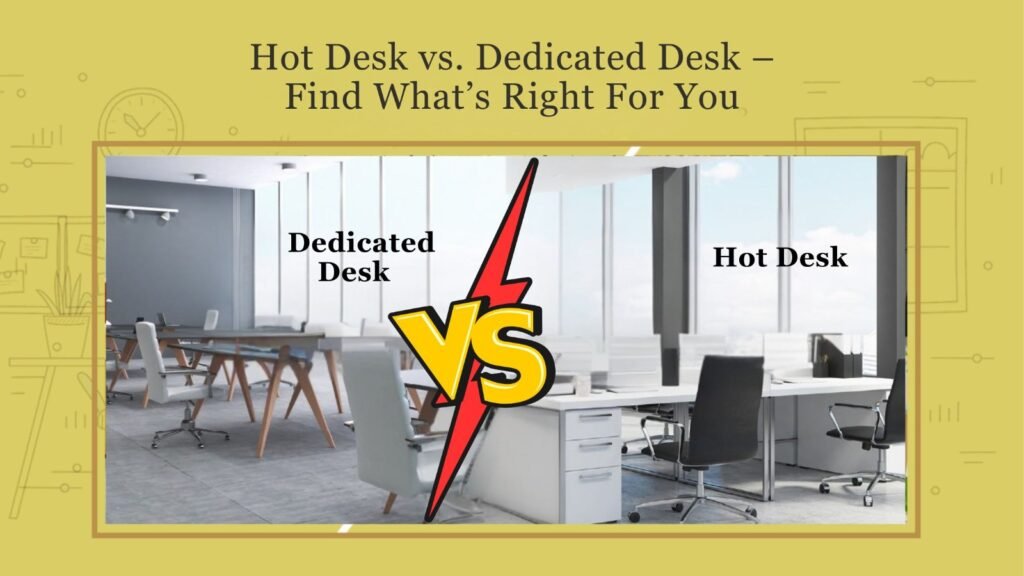
Hot Desk vs. Dedicated Desk – Find What’s Right For You: A Comprehensive Guide

1. Introduction to Coworking 1.1 Definition of Coworking Hot desks offer a versatile work environment where professionals from various fields come together to share a workspace. This approach fosters collaboration, creativity, and community while providing essential resources for enhanced productivity. 1.2 The Rise of Flexible Work Environments In recent years, the nature of work has undergone significant transformation, with more professionals opting for flexible working arrangements. As remote work gained popularity, coworking spaces emerged to cater to individuals and companies seeking a shared, dynamic environment that balances structure and flexibility. 1.3 Overview of Desk Options in Coworking Spaces Within coworking spaces, two primary desk options have gained traction: hot desks and dedicated desks. Each offers its own set of benefits and drawbacks, catering to different work styles and preferences. 2. Understanding Hot Desking 2.1 What is a Hot Desk? A hot desk is a flexible workspace that does not have a designated seat. Users enjoy the flexibility and freedom to choose any open desk on a first-come, first-served basis. This setup promotes interaction among coworkers and adaptability to changing work dynamics. 2.2 Advantages of Hot Desking 2.2.1 Cost-Effectiveness Hot desking often comes at a lower price point than dedicated desks, making it a budget-friendly option for freelancers and startups looking to minimize overhead costs. 2.2.2 Networking Opportunities The fluid nature of hot desking fosters a diverse environment where individuals can connect and collaborate with peers from various industries, enhancing networking opportunities. 2.2.3 Flexibility and Adaptability Hot desking allows professionals to choose their workspace according to their mood or task at hand, encouraging a more dynamic approach to work. 2.3 Disadvantages of Hot Desking 2.3.1 Lack of Personalization With no assigned desk, individuals may find it challenging to personalize their workspace, which can impact comfort and productivity. 2.3.2 Disruption and Noise The movement of people and activities can create a noisy environment, making concentration difficult for some workers. 2.3.3 Uncertainty of Workspace Availability The first-come, first-served nature of hot desking can lead to uncertainty about whether a desk will be available when you arrive, which may cause stress for some users. 3. Exploring Dedicated Desks 3.1 What is a Dedicated Desk? A dedicated desk is a reserved workspace that is assigned to a single user for their exclusive use. This setup provides a personal and consistent work environment. 3.2 Advantages of Dedicated Desks 3.2.1 Personalization and Control Dedicated desks allow individuals to create a workspace that reflects their style and needs, enhancing comfort and ownership of their environment. 3.2.2 Consistency and Stability Having a set workspace promotes routine and stability, which can be beneficial for focused work and long-term projects. 3.2.3 Enhanced Productivity Many find that a familiar workspace minimizes distractions and can enhance overall productivity, making it easier to concentrate on tasks. 3.3 Disadvantages of Dedicated Desks 3.3.1 Higher Cost Dedicated desks generally come at a higher price point, which may not be feasible for all freelancers or startups. 3.3.2 Limited Networking The fixed nature of a dedicated desk may limit opportunities for spontaneous interactions and collaborations with others. 3.3.3 Less Flexibility Dedicated desks can lack the flexibility that hot desking provides, potentially leading to monotony for some users. 4. Comparison of Hot Desks and Dedicated Desks 4.1 Cost Analysis 4.1.1 Startup Costs Hot desks usually entail lower initial costs, making them ideal for startups or freelancers. In contrast, dedicated desks often require a higher upfront payment. 4.1.2 Ongoing Expenses While ongoing costs for hot desking are typically lower, dedicated desk users may experience stable monthly fees that are predictable for budgeting. 4.2 Workspace Experience 4.2.1 Environment and Culture Hot desking fosters a diverse and vibrant environment, while dedicated desks can create a more stable, albeit potentially less dynamic, culture. 4.2.2 Accessibility and Location Both options often offer prime locations, but the workspace experience can vary based on design and available amenities. 4.3 Suitability for Different Types of Workers 4.3.1 Freelancers and Remote Workers Hot desks may appeal to freelancers seeking flexibility, while dedicated desks provide stability for remote workers with consistent tasks. 4.3.2 Small Teams and Startups Small teams may benefit from the collaboration opportunities of hot desking, while startups aiming for a strong identity may prefer dedicated spaces. 4.3.3 Corporations and Enterprises Big businesses might choose dedicated desks for employees needing consistent workspaces but can also implement hot desking to optimize space. 5. Making the Right Choice for You 5.1 Assessing Your Work Style and Needs 5.1.1 Personal Preferences Consider whether you thrive in an informal, ever-changing environment or if you require a stable, personalized workspace. 5.1.2 Types of Work Tasks Evaluate your daily tasks. If they demand high concentration, a dedicated desk might be more suitable. Conversely, if you often collaborate, hot desking could offer the advantage. 5.2 Evaluating Your Budget Analyze your financial situation. Determine what you can afford and whether the cost of dedicated desks aligns with your income or funding prospects. 6. Conclusion 6.1 Recap of Key Points In summary, both hot desks and dedicated desks have their unique advantages and disadvantages. Understanding these can help you make the most informed decision for your working style. Take the time to think about your work environment preferences and how they align with your professional goals. 6.2 The Future of Workspaces As we look ahead, the trend of flexible workspaces is likely to continue evolving, presenting further opportunities for innovation in how we collaborate and create.

Coworking space
Blog, Coworking Space

Green Revolution in Office Spaces: The Role of Sustainable Coworking Spaces in India

Introduction of Coworking Spaces: In the rapidly evolving real estate industry, a silent revolution is brewing, one that is addressing one of the most pressing global challenges of our time – climate change. This transformation is being spearheaded by the exponential growth of coworking spaces. A phenomenon that is revolutionizing the way we work and collaborate. Coworking spaces, with their flexible and cost-effective alternatives to traditional offices. We have created vibrant communities of entrepreneurs, freelancers, and remote workers. However, their impact extends beyond just the workspace. They are playing a pivotal role in India’s ambitious journey towards achieving Net Zero carbon emissions by 2070. This transformation is particularly significant as infrastructure and real estate hold the potential to substantially reduce global carbon emissions through the adoption of sustainable business practices, a demand increasingly vocalized by today’s occupants. The Rise of Sustainable Coworking Spaces: As the world becomes more environmentally conscious, the need for sustainability practices in all industries becomes paramount, including the coworking sector, one of the fastest-growing segments in commercial real estate. In India, the rise of sustainable coworking spaces is having a profound impact on how we work, paving the way for a greener and more eco-friendly future. According to international property consultant JLL, the coworking sector in India is projected to surpass 50 million square feet by the end of 2023, a testament to its rapid adoption. The Green Imperative – Environmental Challenges in India: Sustainable coworking spaces have emerged as a response to the environmental concerns associated with traditional office models. By democratizing premium office spaces, these coworking spaces eliminate the need for separate offices for every organization, as a single space can be shared by multiple organizations, thereby making the hybrid work model commonplace. By sharing amenities and services, occupants at coworking spaces make substantial contributions towards reducing carbon emissions. Promoting resource efficiency in coworking spaces: Sustainable coworking spaces prioritize the efficient use of resources, minimize waste generation, and promote environmentally responsible practices. They emphasize the incorporation of green building design principles, energy-efficient technologies, waste reduction measures, and eco-friendly materials into their infrastructure. One of the central tenets of sustainable coworking spaces is the utilization of renewable energy sources. Solar panels are often deployed to capture solar energy, diminishing reliance on fossil fuels and mitigating carbon emissions. Rainwater harvesting systems are also implemented to collect and store rainwater, conserving water resources and mitigating water scarcity. Eco-friendly Architecture and Design in coworking spaces: The architectural and design features of sustainable coworking spaces play a crucial role in enhancing their environmental sustainability. These spaces utilize green building practices to craft energy-efficient structures that seamlessly integrate with the environment. Passive design techniques, such as strategically placed windows for natural lighting and ventilation, reduce the need for artificial lighting and air conditioning, thus saving energy. Furthermore, sustainable coworking spaces frequently place a strong emphasis on utilizing recycled and environmentally friendly materials in their construction and furnishing. From repurposed wood to low-VOC (volatile organic compounds) paints, these spaces reflect a dedication to minimizing their environmental footprint throughout their entire lifecycle. Leveraging Technology and Awareness: Sustainable coworking spaces incorporate innovative technologies to improve energy efficiency and minimize energy usage. Efforts to minimize electricity consumption are aided by the adoption of smart lighting systems, motion sensors, and energy-efficient appliances. Moreover, the integration of sophisticated waste management systems aims to foster recycling and composting, reducing the amount of waste sent to landfills. Sustainable coworking environments not only focus on their physical infrastructure but also actively promote eco-friendly behaviors among their members. Sustainability and environmental responsibility are prioritized through regular awareness programs and workshops. Members are urged to embrace sustainable practices, including decreasing paper consumption, opting for reusable water bottles and coffee cups, and favoring public transportation or cycling instead of private vehicles. Community and Social Responsibility in coworking spaces: Sustainable coworking spaces foster a strong sense of community and promote social responsibility.  They arrange eco-friendly events, training sessions, and conferences that unite individuals with shared interests to share ideas and collaborate in pursuit of a more environmentally friendly future. These occasions frequently spotlight topics related to the environment, sustainable business approaches, and environmentally conscious advancements. Economic Benefits and Government Support: In addition to the clear environmental benefits, sustainable coworking spaces offer economic advantages for both workspace providers and their members. The implementation of energy-efficient measures results in reduced operational expenses, allowing for more budget-friendly membership fees. This cost-effectiveness expands the accessibility of these spaces to a wider demographic, thereby fostering greater diversity and inclusiveness within the coworking community. While the initial investment in green technologies and materials may be higher, the long-term savings and positive environmental impact outweigh the initial costs. To encourage more coworking spaces to adopt eco-friendly measures, the government has been offering various incentives and support, such as tax benefits, grants, and easier access to green technologies. Conclusion: In conclusion, sustainable coworking spaces in India are presenting a promising solution to environmental challenges while fostering a collaborative and progressive work culture. With the growing momentum in the sustainability movement, the dream of a more environmentally friendly and sustainable India is now achievable through the collaborative endeavors of sustainable coworking spaces and their active member community. These spaces are not just reshaping our work culture but are also at the forefront of combatting climate change, significantly contributing to India’s pursuit of achieving Net Zero emissions by 2070, making this goal more feasible than ever.