inspire office space wp

best workspace in chennai

GCCs, startups and SMEs driving Chennai’s flexible office market with modern office spaces
Blog, Coworking events in Chennai, Coworking Space, Flexible Office Space in Chennai, Furnished Office Space, Inspire Coworking, Inspire Office Space, Meeting Room, Renting office space in chennai, Shared Office Space

GCCs, Startups and SMEs – Who Is Driving Chennai’s Flexible Office Market?

Introduction: Chennai’s Office Market Is Learning to Bend Chennai’s office market doesn’t look like it used to. Businesses today aren’t chasing the same kind of workplace at all. A large Global Capability Centre might need several hundred seats from day one. A startup might walk in needing space for five or ten people, tops. An SME might need a professional setup for 20 employees right now — and a good chunk more a year from now. That mismatch in needs is exactly what’s fueling the rise of flexible office spaces across the city. Instead of locking into a traditional setup — with its long planning cycles, interior work, furniture shopping, and infrastructure headaches — businesses can simply choose a ready-to-use, scalable space and get moving. So who’s actually behind this shift? GCCs, startups, SMEs — or is it really all three at once? 1. What Does “Flexible Office Space” Actually Mean? A flexible office lets a business choose space based on what it needs right now, instead of forcing it into a fixed, long-term setup. Depending on the provider, that can include: The real draw here is choice. A company picks the seat count and space type that fits its current stage, and skips most of the setup work that comes with building an office from the ground up. 2. GCCs: Pushing Demand for Bigger, Scalable Spaces Global Capability Centres have become a real force in Chennai’s commercial landscape. Modern GCCs increasingly work across technology, engineering, product development, data analytics, finance, research and development, artificial intelligence, and digital operations. As these teams expand, their office needs grow right along with them. A GCC might start with a small team space and, within a couple of years, need dozens or even hundreds of seats. That kind of trajectory demands a very specific combination: scalability, solid infrastructure, privacy, and professional facilities — all at once. For a GCC, flexibility rarely means a tiny office. It usually means being able to expand fast, without operations grinding to a halt while the physical space catches up. 3. Startups: Choosing Flexibility Over Long-Term Commitment Startups play a different game entirely. Headcount can shift overnight, and business plans can pivot just as fast. A typical growth path might look like this: 5 employees → 10 employees → 25 employees → 50 employees Locking into a large traditional office early on rarely makes financial or operational sense at that stage. Flexible offices let startups start with exactly what they need — nothing more. They still get access to meeting rooms, a reception area, reliable internet, and a genuinely professional environment, without having to build any of it themselves. For a startup, the appeal really comes down to three things: less setup, more flexibility, faster decisions. 4. SMEs: The Middle Ground With Growing Demand Small and medium-sized enterprises usually want something different again. They’ve often already built an established business and simply don’t want the hassle of managing a large traditional office. What they’re typically after is a professional business address, somewhere between 10 and 30-plus seats, private cabins, meeting rooms for client visits, flexible rental terms, room to expand, and infrastructure that’s ready from day one. For this segment, flexible offices strike a useful balance — a dedicated, professional space that still comes with the shared infrastructure and services you’d expect from a coworking setup. 5. Why All Three Segments Are Pushing Demand in the Same Direction GCCs, startups, and SMEs clearly want different things. But they all agree on one point: none of them want their office to become the thing that slows their growth down. A startup doesn’t want to relocate every time it hires a handful of new people. An SME doesn’t want to lose months setting up a new office. A GCC doesn’t want infrastructure delays holding back a team expansion it’s already committed to. Put those three together, and you get real demand for workplaces that can adapt across every stage of business growth — not just one. 6. Plug-and-Play Offices Are Accelerating the Shift A big reason flexible offices keep gaining traction is the rise of plug-and-play spaces. A ready-to-use office wipes out most of the traditional setup process. Instead of starting with an empty commercial shell and coordinating everything separately, a business can move straight into a space that already has furniture, workstations, internet, meeting rooms, reception, air conditioning, power backup, and housekeeping sorted. For companies working against tight expansion timelines, that head start can matter a lot more than it sounds. 7. Location Still Carries Real Weight Flexibility isn’t only about how many seats you get. Where those seats sit matters just as much. Employees need a commute that doesn’t wear them down, and businesses need clients and visitors to reach them without friction. In Chennai, offices near metro stations, major roads, public transport, residential neighbourhoods, and everyday essentials like restaurants tend to pull ahead as the more attractive choice for growing companies. For businesses hiring talent from across the city, that kind of accessibility can shape employee experience — and even how often people actually show up. 8. Hybrid Work Keeps Adding New Layers to the Demand Hybrid working has changed how companies think about office capacity altogether. Not every employee needs a permanently assigned desk anymore. Instead, businesses increasingly want a mix — workstations, collaboration areas, meeting rooms, private spaces, training rooms, and flexible seating, combined in whatever ratio actually fits how their people work. That lets a company build its workplace around real usage patterns, rather than guessing. And flexible office providers are well placed to deliver exactly that kind of adaptable setup. 9. GCCs vs. Startups vs. SMEs: What Each Segment Actually Needs Business Type Typical Requirement Main Priority GCCs Larger team spaces Scalability and infrastructure Startups Small to medium spaces Flexibility and cost control SMEs Private or team offices Professional setup and convenience None of these categories stay fixed, though. A startup can grow into an SME. An SME can grow into a
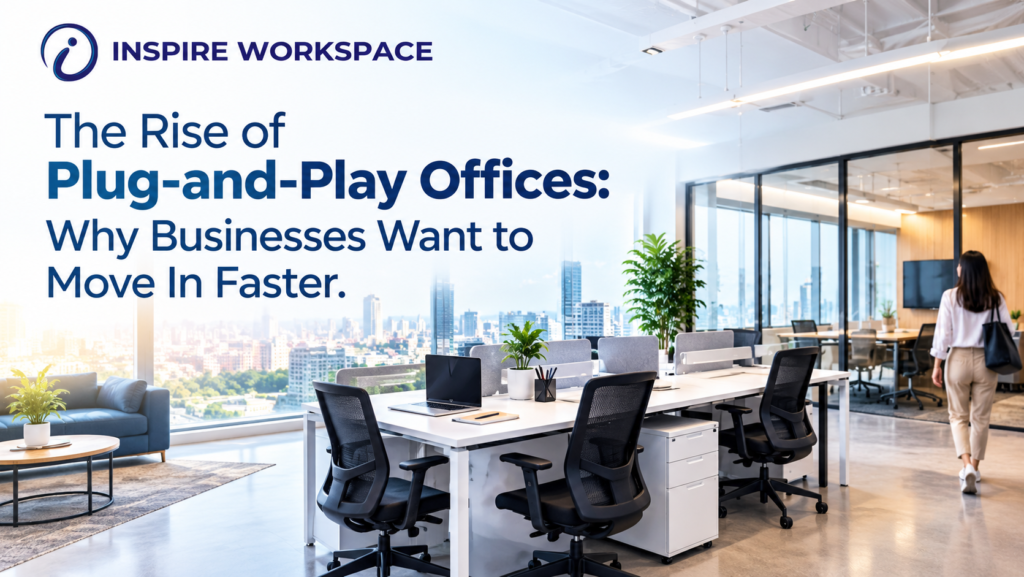
Modern plug-and-play office space with furnished workstations, ergonomic chairs, glass meeting rooms and a bright professional interior
Blog, CEO SPEAKS, Coworking events in Chennai, Coworking Space, Flexible Office Space in Chennai, Furnished Office Space, Inspire Coworking, Inspire Office Space, Meeting Room, Renting office space in chennai, Shared Office Space

The Rise of Plug-and-Play Offices – Why Businesses Want to Move In Faster

Introduction: Nobody Wants to Wait Months for an Office Anymore Plug and Play Office Space has changed the way businesses approach office setup. Instead of spending months finding a property, designing interiors, buying furniture, installing internet, and arranging essential facilities, businesses can move into a professionally furnished office and start operating much sooner. You’d find a property, design the interiors, buy furniture, get the internet installed, sort out the electrical work, build meeting rooms, set up a reception desk, and hire someone to maintain the place. By the time all of that actually came together, weeks — sometimes months — had already gone by. Businesses don’t run on that timeline anymore. A startup opening its first office, a company expanding into a new city, or a team simply adding more people to the payroll — none of them want to sit around for months before they can actually get to work. That’s exactly why plug-and-play offices have taken off. The pitch is refreshingly straightforward: find the right space, move in, and start operating almost immediately. 1. What Is Plug and Play OfficeSpace and How Does It Work? A plug-and-play office is a workspace that shows up ready to use, with most of the infrastructure a business needs already in place. Depending on the provider, that usually includes: Rather than starting from an empty shell of a commercial space, a business simply walks into an environment built for day-to-day work. That’s exactly why the model appeals so much to companies chasing speed and flexibility over anything else. 2. Why Speed Has Become Non-Negotiable Time itself has turned into a business resource companies guard closely. When a company is hiring, entering a new market, or opening a fresh branch, every week lost to office setup chips away at the bigger plan. A ready-to-use office sidesteps most of those delays. Traditional setup usually looks like this — Property → Design → Interiors → Furniture → Internet → Infrastructure → Operations Plug-and-play setup looks more like this — Choose space → Complete formalities → Move in → Start operating The exact timeline still depends on the provider and what the business actually needs, but the gap in complexity between the two paths is hard to ignore. 3. Less Hassle Right from the Start Building an office out of an empty commercial property means juggling a lot of moving parts at once. Businesses typically end up coordinating with interior contractors, furniture vendors, internet providers, electrical contractors, IT teams, maintenance staff, and security vendors — often all at the same time. A plug-and-play office bundles most of that into a single workspace solution. That doesn’t automatically mean every business spends less money overall. What it does mean is a serious cut in the time, coordination, and upfront effort the setup demands. 4. Flexibility Has Become the Real Selling Point Business needs shift fast. A company might start with 10 employees and cross 25 within a year. Another might just need a temporary office while it figures out where to put down permanent roots. A standard office lease rarely bends enough to keep up with either situation. Plug-and-play and managed office setups, by contrast, tend to offer a range of configurations depending on the provider — dedicated desks, private cabins, small team offices, spaces for 20-plus seats, larger team setups, and standalone meeting rooms. That variety lets a business pick a setup that actually matches where it stands right now, instead of forcing a fit. 5. Built for Teams That Are Growing Fast Growth creates its own strange office-space dilemma. You don’t want to rent a space so big it swallows your current team. But you also don’t want to pack up and move every time you bring on a few new hires. That’s where scalability earns its keep. A flexible office provider will often let a business expand into more seats or additional space as the team grows, without triggering a full relocation. Today — 15 seats Tomorrow — 25 seats Later — 40+ seats The office grows in step with the business, rather than forcing the business to plan around the office. 6. Chennai Businesses Are Chasing Faster Solutions Chennai’s business landscape spans technology, IT services, automotive, finance, healthcare, manufacturing, startups, and professional services — and as these companies expand, their office needs have gotten a lot more varied. Some just need a small private office. Others need 20, 30, or 40-plus seats. Some want meeting rooms built for client visits. Others need a proper reception area to greet visitors. Instead of spending months building all of this from the ground up, more businesses are turning to ready-to-move office spaces in Chennai that already have the infrastructure sorted. 7. Speed Shouldn’t Come at the Cost of a Good Workplace Moving fast doesn’t mean cutting corners on the actual experience of working there. Employees spend a large chunk of their day inside that office, so it still needs to feel practical and comfortable — not just quick to move into. That means paying attention to ergonomic furniture, good lighting, dependable internet, a comfortable temperature, real collaboration space, clean common areas, and easy accessibility. A plug-and-play office earns its reputation only when speed and workplace quality show up together. 8. A Professional Image, Without the Long Build-Out For companies that regularly host clients, investors, partners, or job candidates, the office itself shapes a first impression before a single word gets said. A ready-to-use professional space usually comes with a proper reception, visitor seating, meeting rooms, private cabins, and conference facilities already built in. That lets a growing company put its best foot forward — without spending months constructing that impression piece by piece. 9. Plug and Play vs. Traditional Office Setup Factor Traditional Office Setup Plug-and-Play Office Setup time Usually longer Usually faster Interior work Often required Already prepared Furniture Needs to be arranged Generally available Internet setup Separate coordination Often available Flexibility Depends on lease Often higher Expansion May require relocation Can be easier Management

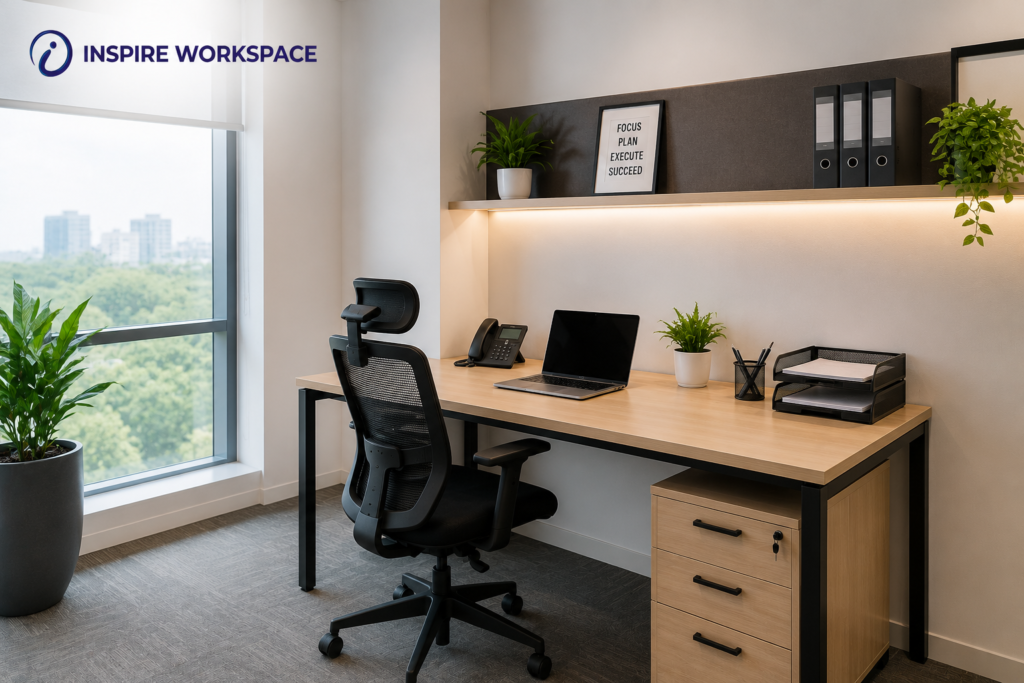
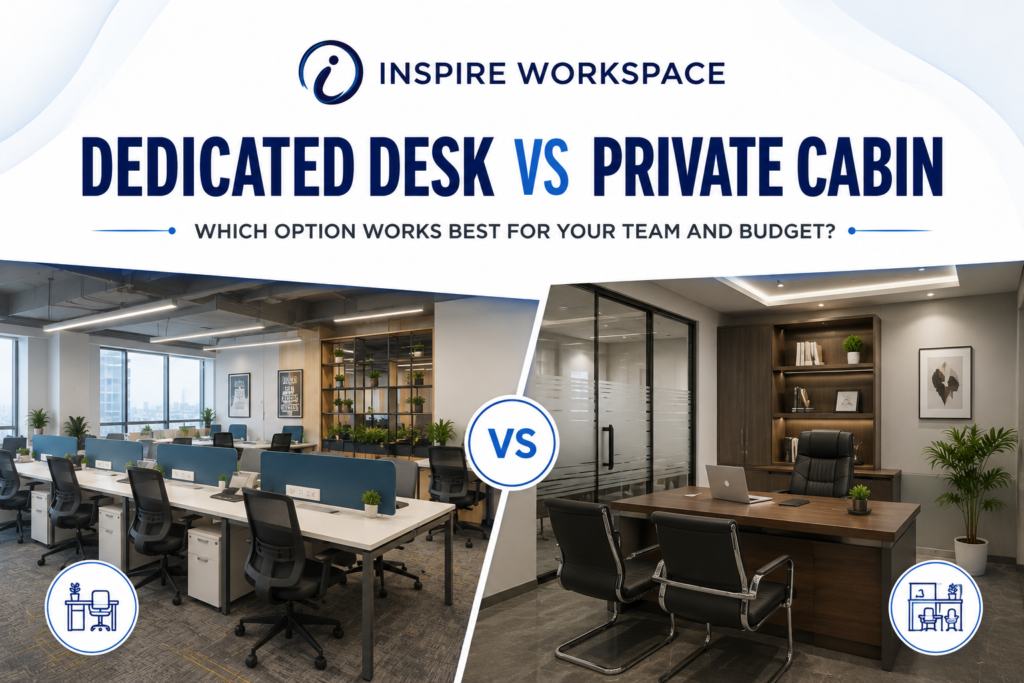
Dedicated desk vs private cabin in a modern coworking office space, comparing workspace options for teams and budgets
Blog, Coworking events in Chennai, Coworking Space, Flexible Office Space in Chennai, Furnished Office Space, Inspire Coworking, Inspire Office Space, Meeting Room, Renting office space in chennai, Shared Office Space

Dedicated Desk vs Private Cabin: Which One Actually Fits Your Business?

Introduction Picking an office space usually comes down to a handful of practical questions: how much can you spend, how much privacy do you actually need, and how big is your team going to be a year from now? Two of the most common options you’ll run into while researching coworking spaces are the dedicated desk and the private cabin — and while they might sound like minor variations of the same thing, each one solves a different kind of problem. If you’re shopping for office space, you’ve probably run into these two terms and wondered whether the difference really matters. It does — more than most people expect. A dedicated desk and a private cabin solve different problems, and picking the wrong one usually shows up later as either wasted money or a workspace that’s too cramped for what your team actually needs. Here’s how to think about it. What You Get With a Dedicated Desk Think of a dedicated desk as your own permanent spot inside a shared office. You’re not fighting for a seat every morning like you would with hot-desking — the same desk is yours every day — but you’re still working alongside other freelancers, small teams, and businesses in a shared floor. It’s a popular pick for: What makes it worth it: What You Get With a Private Cabin A private cabin is a closed, lockable room — your own four walls inside the coworking facility. This is the option people reach for once privacy and focus start to matter more than saving a few thousand rupees a month. It tends to make sense for: What makes it worth it: Dedicated Desk vs Private Cabin, Side by Side Factor Dedicated Desk Private Cabin Cost per seat ₹6,000 – ₹10,000/month ₹10,000 – ₹18,000+/month Privacy Open, shared surroundings Enclosed and lockable Ideal team size 1–4 people 3–15+ people Branding/signage Usually limited Often available Client meetings Book a separate meeting room Can often happen right in the cabin Best for Freelancers and small teams Growing or privacy-focused businesses So Which One Should You Pick? If cost is your main concern and you don’t need a closed room for most of your day, a dedicated desk gets the job done without the extra spend. You still get a proper desk, shared amenities, and a business address — just without paying for four walls you might not need yet. If privacy, client meetings, or team collaboration are non-negotiable, a private cabin is worth the extra cost. It’s especially useful once your work involves confidential conversations or you’re regularly bringing clients into the office. A good way to decide: don’t just look at your team size today — think about where it’ll be in six months. A lot of businesses start on a dedicated desk and move into a cabin once the team outgrows the open floor. Planning for that ahead of time saves you from switching providers or locations later. Growing Out of a Dedicated Desk Most businesses don’t start out needing a private cabin. Early on, a dedicated desk is usually enough — it’s affordable and gets the job done. But as you hire, take on more client meetings, or start handling work that needs to stay confidential, that open desk can start to feel limiting. That’s usually the point where a private cabin starts to make more sense — not because the dedicated desk was a bad choice, but because the business has outgrown it. It’s less about picking the “better” option upfront and more about matching the space to where your business actually is right now. Looking for Office Space in Vadapalani? Inspire Office Spaces in Vadapalani offers both dedicated desks and private cabins, along with meeting rooms and managed office setups — so you can start with what you need today and move into a bigger space when you’re ready. The location sits near Vadapalani Metro and right opposite Nexus Forum Mall, which makes commuting easier for both your team and any clients visiting the office. Whether you’re after a single desk or a private room for a growing team, the right setup can make a real difference to how your day-to-day work actually feels. Frequently Asked Questions Is a dedicated desk cheaper than a private cabin? Yes, generally. Since it’s part of a shared space, it doesn’t cost as much as a fully enclosed cabin — which is why it’s popular with freelancers and smaller teams watching their budget. Can a small team work out of a private cabin? Definitely. Plenty of small teams choose a cabin specifically for the privacy it gives them during calls, meetings, and day-to-day discussions. Can I meet clients at a coworking space? Yes — most coworking spaces have meeting rooms you can book for client conversations, even if your regular seat is a dedicated desk rather than a cabin. What’s better for a growing business — a desk or a cabin? It depends on the stage you’re at. A cabin gives you more room and privacy to grow into, but a dedicated desk is often the smarter starting point when the team is still small and costs matter more. At the end of the day, there’s no universal right answer — just the option that fits where your business is today, and where it’s headed next. Conclusion There’s no version of this decision that’s right for everyone — it really comes down to your budget, your privacy needs, and how big you expect your team to get. A dedicated desk works well when you want a professional setup without paying for space you don’t need yet. A private cabin makes more sense once privacy, client meetings, or team size start to matter more than saving on rent. The smartest approach is to be honest about where your business stands right now, but keep one eye on where it’s headed. If you’re in Chennai and weighing these options, Inspire Office Spaces in Vadapalani has both formats available, so

Virtual Office for GST Registration in Chennai with Inspire Workspace
Blog, Coworking events in Chennai, Coworking Space, Flexible Office Space in Chennai, Furnished Office Space, Inspire Coworking, Inspire Office Space, Meeting Room, Renting office space in chennai, Shared Office Space

Virtual Office for GST Registration in Chennai: What Every Founder Should Know in 2026

Introduction Every founder hits the same wall eventually: you’re ready to register your company or apply for a GSTIN, and the form asks for a “principal place of business.” What if you run your business from home? Or a client’s office? Or three cities at once? That single line on the form can turn into a real roadblock. That’s why virtual offices have caught on fast among startups and small businesses in Chennai. Most founders at this stage don’t need a desk or a meeting room. They need a professional business address they can actually put on their registration papers. What a Virtual Office Actually Solves A virtual office gives your business a real, verifiable commercial address — no rent, no furniture, no full-time lease. You can use that address for GST registration, MCA/company incorporation, business correspondence, and a handful of other requirements, depending on the provider and package you pick. For founders, it solves three problems at once: The Documents You’ll Actually Need This trips up almost every first-time founder. Before you sign with a provider, ask exactly what documents they hand over for GST or MCA registration. In most cases, you’ll need: A provider worth using will tell you upfront exactly which of these they supply — and whether those documents will actually hold up during your registration. GST and Company Registration Aren’t the Same Process Don’t treat them as identical, because they’re not. For GST registration, your address and supporting documents need to match your application exactly. GST authorities sometimes verify the premises in person, too. Company or LLP incorporation through the MCA follows a different paper trail. The registered office still needs an NOC and address proof, but the specifics can vary by case. Experience matters here. A provider who’s done this before can tell you what paperwork you’ll need before you’re stuck redoing an application. Location Still Matters, Even for a Virtual Office You’re not getting a desk, but the address itself still carries weight. Here’s why: Vadapalani, for instance, sits on a strategic stretch of Chennai with easy access to major roads, public transport, and established commercial pockets — useful if you want a professional presence now and room to grow later. A Virtual Office Can Be More Than an Address The better providers throw in more than a mailing address. Depending on the package, you might get: These start to matter a lot more once your business actually grows. If a provider is only selling you an address, know that going in — and know what you’re not getting. Common Mistakes Founders Make 1. Picking the cheapest option A low-cost virtual office looks great on paper until the documentation falls short. Price matters less than whether the provider can actually back your registration. 2. Assuming one address covers every state GST registration is state-specific. Need to operate in multiple states? You’ll need a valid address and documents for each one. 3. Not checking who signed the NOC Don’t take an NOC at face value. Confirm the person signing it actually has the authority to give consent for that property. 4. Judging a provider by the address alone Some providers stop at the address. Others throw in mail handling, meeting rooms, and workspace access. Compare what’s actually included — not just the monthly rate. Final Thought A virtual office works well for early-stage businesses that need a legitimate address without committing to a full-time lease. The address itself is the easy part. Getting the documentation, the NOC, and the registration support right is where providers actually differ. Check all of it — documents, location, and what’s bundled in — before you sign anything. If you’re setting up in Chennai and looking at a virtual office in Vadapalani, Inspire Office Spaces offers a professional business address alongside workspace options built for founders who are just getting started. Choosing the right provider now can save you a second trip to fix paperwork later.

Vadapalani vs Guindy vs Teynampet office locations comparison for businesses in Chennai
Blog, CEO SPEAKS, Coworking events in Chennai, Coworking Space, Flexible Office Space in Chennai, Furnished Office Space, Inspire Coworking, Inspire Office Space, Meeting Room, Renting office space in chennai, Shared Office Space

Vadapalani vs Guindy vs Teynampet: Which Office Location Is Right for Your Business?

Picking an office address in Chennai is never just about square footage and rent per square foot. It’s about who your employees are, who your clients are, and how the city’s traffic patterns will shape your team’s daily life. Three localities come up again and again in this conversation: Vadapalani, Guindy, and Teynampet. Each has a distinct personality, price point, and business profile — and the “best” one depends entirely on what your company actually needs. This guide breaks down all three so you can make a decision with confidence, not guesswork. Quick Snapshot Factor Vadapalani Guindy Teynampet Best for Startups, SMEs, cost-conscious teams IT/ITES, mid-to-large corporates, industrial-adjacent businesses Corporate HQs, finance, consulting, client-facing firms Rent range Budget to mid-range Mid to high High to premium Metro connectivity Yes (Vadapalani Metro) Yes (Guindy Metro + MRTS + suburban rail) Nearby via Nandanam/Teynampet stretch, strong road access Airport proximity Moderate Excellent (closest of the three) Moderate Vibe Commercial, residential mix, buzzing market street Industrial-turned-IT hub, corporate campuses Polished, upscale, corporate boulevard Vadapalani: The Budget-Friendly, Well-Connected Choice Vadapalani sits in central-west Chennai, right along Arcot Road, and has long been known as a busy commercial and residential neighborhood rather than a dedicated business district. That’s actually part of its appeal for smaller companies. Why businesses choose Vadapalani: Where it falls short: Best fit: Startups, small and mid-sized enterprises, back-office teams, training institutes, and any business prioritizing cost control and city-wide accessibility over prestige. Guindy: The Industrial-to-IT Powerhouse Guindy has transformed from an industrial estate into one of Chennai’s most important commercial and IT corridors. It sits close to the airport and is a well-established address for both legacy manufacturing-linked businesses and modern tech companies. Why businesses choose Guindy: Where it falls short: Best fit: IT and ITES companies, engineering and manufacturing-linked businesses, mid-to-large corporates that need strong transport links (especially to the airport), and companies wanting an established commercial-hub address. Teynampet: The Premium Corporate Address Teynampet, part of Chennai’s central business corridor along Anna Salai and near Nungambakkam and Alwarpet, is where a lot of Chennai’s corporate and consulting firms choose to set up shop. It’s less about cost and more about prestige, polish, and centrality. Why businesses choose Teynampet: Where it falls short: Best fit: Corporate headquarters, consulting and finance firms, legal practices, and any business where a polished, high-visibility address adds real value to client relationships. How to Decide: Match the Location to Your Business Stage Vadapalani works best if you’re early-stage or watching costs closely. You still get flexible space, dependable connectivity, and a fairly central location — just without the premium-district price tag. If you’re in IT, engineering, or logistics, Guindy is probably the stronger fit. Airport proximity, multiple transit options, and an already-established commercial ecosystem make it worth the higher rent, provided your budget can absorb it. For businesses that are client-facing, corporate, or need to impress investors, Teynampet makes the most sense. The address itself carries weight, and if that prestige and central positioning matter to how your business is perceived, the premium becomes justified rather than wasted. Other Factors Worth Weighing Beyond rent and reputation, a few practical questions can tip the decision: Final Word There’s no universally “right” answer between Vadapalani, Guindy, and Teynampet — only the right answer for your business’s stage, budget, and priorities. Vadapalani wins on affordability and flexibility, Guindy wins on connectivity and established infrastructure, and Teynampet wins on prestige and centrality. Match the location to what your business actually needs to run and grow, and the office address will work for you instead of against you. Rents and availability change frequently across all three localities, so it’s worth getting current quotes from a local commercial broker before finalizing your decision.

Meeting room etiquette and booking guide for Chennai startups
Blog, CEO SPEAKS, Coworking events in Chennai, Coworking Space, Flexible Office Space in Chennai, Furnished Office Space, Inspire Coworking, Inspire Office Space, Meeting Room, Renting office space in chennai, Shared Office Space

Meeting Room Etiquette & Booking Guide for Chennai Startups

Introduction A meeting room says more about your startup than your pitch deck does. Before a client hears a single word from you, they’ve already noticed whether the room was ready, quiet, and professional — or scrambled together at the last minute. For early-stage founders in Chennai, getting meeting room booking right isn’t just a logistics task. It’s part of how you’re perceived. This guide covers exactly how to book a meeting room in Vadapalani, what etiquette actually matters once you’re in the room, and the small mistakes that quietly cost startups credibility. Why Meeting Room Booking Matters for Startups Most early-stage teams don’t have a dedicated office manager. That means booking logistics — room size, AV setup, timing — often fall to whoever’s running the meeting. Get it wrong, and you’re troubleshooting a projector cable while your investor waits. Get it right, and the meeting starts on your terms. The Credibility Advantage of a Rented Meeting Room A properly booked, well-equipped coworking meeting room in Chennai also solves a problem most startups don’t talk about openly: not having a “real” office to invite clients to. A rented boardroom for an hour costs a fraction of a long-term lease and removes that awkwardness entirely. How to Book a Meeting Room in Vadapalani: Step-by-Step 1. Decide the meeting type first, then the room.A one-on-one investor call needs a small, private cabin with strong Wi-Fi. A client pitch or board review needs a boardroom-style setup with a display screen and seating for the full group. Booking based on headcount alone often leads to rooms that are the wrong shape for the conversation. 2. Check availability and lock the slot early.In business hubs like Vadapalani, peak slots — late morning and early afternoon — fill up fastest, especially around month-end when most companies run reviews. Book at least 24–48 hours ahead for anything client-facing. 3. Confirm what’s included before you commit.Not every “meeting room” comes with the same amenities. Before booking, confirm the display or projector setup, video conferencing equipment, whiteboard access, refreshments, and reception support to receive your guests. 4.Ask about buffer time. Meetings run over. Find out whether your booking includes a grace period or whether consecutive bookings will require you to leave as soon as your slot ends—this will influence how you plan the conversation. 5.Obtain a confirmation that includes your room number and the instructions regarding access. This is especially important when your guests are visiting for the first time. Provide the parking information, the specific floor and room, and also give a contact number in case they are unable to locate the entrance. The following etiquette rules for meeting rooms should be observed by every startup. Correctly booking the room is half the task. The other half consists of what takes place within it. Get there earlier than your guests do. If you arrive at the room between 10 and 15 minutes early, you’ll have the opportunity to check the screen, make adjustments to the lighting, and get used to your surroundings — rather than having to set everything up while your client is watching. Leave the room in exactly the same condition as when you first entered it. Clean the cups, wipe the whiteboard, and put the chairs in. It goes beyond mere courtesy since in a shared coworking space the next person’s booking usually starts immediately after yours, and frequent late handovers can negatively impact your account status. Make sure the phones are on silent and go out when you receive a call. Obvious, but frequently ignored. The professionalism you are aiming to show will be damaged if someone rings the phone or if there is a remark from another person during a meeting with a client. Respect the booked duration. Running over takes up someone else’s time. If you expect a meeting to run long, book extra time in advance instead of extending it on the spot. Tell your guests about it before they come. Send guests a short message with the exact location, floor, and any ID or sign-in requirements at reception. This stops them from wandering the lobby looking for you, and it helps you avoid an unprofessional first impression. Before the meeting begins, not during it, check the technology. Make sure to connect your laptop, check the video call link, and verify the audio five minutes before your guests arrive. When drafting a formal piece, avoid placing a preposition at the end of a sentence. The need to carry out troubleshooting in a live session with a client can cause a quick drop in the effectiveness of your pitch.  Common Mistakes Startups Make When Booking Meeting Rooms Why Booking Matters for Growing Startups It gives your startup a cheap way to behave and look like a bigger company — as long as you plan the booking process carefully instead of arranging it on the spot. Book Your Meeting Room in Vadapalani If you need a meeting room in Vadapalani with a reliable audiovisual setup, fast Wi-Fi, and the option to book by the hour or half-day, take a look at Inspire Office Space’s meeting rooms. Need More Than Just a Room? If your team needs more than just a room for a few hours, consider our coworking spaces in Chennai instead. Conclusion:- Final Thoughts Chennai startups without a boardroom gain a real edge by knowing how to book and use a meeting room well. It’s a cheap way to look like a bigger company — if you plan the booking instead of arranging it last-minute. Need a meeting room in Vadapalani with reliable AV, fast Wi-Fi, and hourly or half-day booking? Check out Inspire Office Space’s meeting rooms, or explore our coworking spaces in Chennai for longer team needs.

Co-working space vs traditional office comparison showing flexible workspaces, private cabins, and modern office facilities.
Blog, Coworking events in Chennai, Coworking Space, Flexible Office Space in Chennai, Furnished Office Space, Inspire Coworking, Inspire Office Space, Meeting Room, Renting office space in chennai, Shared Office Space

Co-working Space vs Traditional Office: Which Is Better for Your Business?

To determine which workspace delivers the greatest value, it is important to compare the benefits and limitations of each option. Comparing both workspace solutions allows businesses to select an environment that delivers long-term value and efficiency Let’s compare both. What Is a Traditional Office? A traditional office involves renting a dedicated commercial space exclusively for your business operations. This model gives businesses complete control over office design, branding, layout, and daily operations. Despite its advantages, a traditional office setup involves additional operational and administrative requirements, including: Office setup and interior design Traditional offices are often suitable for organizations that require complete privacy, customization, and long-term operational stability. What Is a Co-working Space? A co-working space is a fully managed workspace where businesses can begin operations immediately without handling setup or maintenance. Most co-working spaces typically include: ✔ Fully furnished workstations✔ High-speed internet✔ Meeting and conference rooms✔ Reception support✔ Housekeeping services✔ Security management✔ Utility management As a result, businesses can dedicate more time and resources to innovation, customer engagement, and long-term growth. Co-working Space vs Traditional Office: Key Comparison 1. Cost Efficiency Among all decision-making factors, cost remains one of the key considerations when choosing the right workspace Traditional Office Costs: Co-working Space Costs: For startups and small businesses, co-working spaces can improve cash flow and reduce financial pressure. 2. Flexibility and Scalability Business requirements evolve quickly. Traditional offices often require long-term commitments and may become too large or too small as teams change. Co-working spaces allow businesses to: This flexibility makes co-working an attractive solution for growing businesses. 3. Professional Business Environment A professional office environment influences how clients and partners perceive your brand. Modern co-working spaces provide: This enables companies to maintain a professional image without large capital investment. 4. Productivity and Collaboration Workspace design directly impacts performance. Traditional offices provide privacy and complete control. Co-working spaces create opportunities for: Many businesses build valuable partnerships simply by working in shared professional environments. 5. Reduced Administrative Work Managing an office requires time and resources. Traditional offices often involve handling: Co-working spaces remove these operational burdens so businesses can focus on customers, projects, and growth. Which Option Is Better? Traditional Office may be ideal for: ✔ Large enterprises✔ Businesses requiring complete customization✔ Organizations needing long-term fixed operations Co-working Space may be ideal for: ✔ Startups✔ Freelancers✔ Consultants✔ Remote teams✔ Growing businesses✔ Small and medium enterprises Benefits include: Conclusion Workspaces are evolving, and businesses increasingly prioritize flexibility, efficiency, and scalability. While traditional offices remain valuable in certain situations, co-working spaces provide a modern solution that helps businesses operate efficiently and adapt quickly to changing needs. If you are looking for a professional workspace designed to support productivity and business growth, a co-working environment can be a practical choice. At Inspire Office Space, businesses can access co-working spaces, private cabins, meeting rooms, and managed office solutions designed to help teams work smarter and grow faster.

Office Space ROI concept showing business growth, productivity gains, and professional workspace benefits in a modern office environment
Blog, Coworking Space, Flexible Office Space in Chennai, Furnished Office Space, Inspire Coworking, Inspire Office Space, Meeting Room, Renting office space in chennai, Shared Office Space

Office Space ROI: Is Renting a Professional Workspace Worth It?

The Real Question Isn’t the Cost—It’s the Return When businesses evaluate a new workspace, the first thing they often consider is the monthly rent. However, the real measure of value is Office Space ROI. A professional workspace can do much more than provide desks and meeting rooms—it can improve productivity, strengthen client confidence, enhance team collaboration, and support long-term business growth. Whether you’re a startup, freelancer, or growing company, understanding Office Space ROI can help you make smarter decisions that contribute to your business success. What Is Office Space ROI? Office space ROI is the value your business gains compared to the amount spent on office rent and workspace expenses. While rent is easy to calculate, the benefits often extend beyond numbers: The right workspace creates an environment where businesses can operate more efficiently and grow faster. The Hidden Costs of Not Having a Professional Office Many startups initially operate from home or temporary locations to save money. While this arrangement may work in the early stages, it often creates challenges that impact growth. Common issues include: Reduced Productivity Home environments often include distractions that make focused work difficult. Examples: A professional office creates structure and consistency that can significantly improve daily productivity. Limited Client Confidence First impressions matter. When clients visit a professional office, they immediately gain confidence in your business. A dedicated workspace signals stability, professionalism, and commitment. Businesses operating without a professional location may miss opportunities to build trust with potential clients and partners. Collaboration Challenges As teams grow, communication becomes increasingly important. Working remotely or from multiple locations can create the following: A well-designed office encourages collaboration and improves overall team performance. How Professional Office Space Generates ROI 1. Increased Employee Productivity Research consistently shows that workplace environments influence employee performance. Professional office spaces provide: When employees work in a focused environment, they accomplish more in less time. Even a small productivity increase across a team can generate substantial returns over the course of a year. 2. Stronger Professional Image Your office often becomes an extension of your brand. A professional workspace helps businesses: In competitive markets, credibility can directly influence sales and business opportunities. 3. Better Talent Attraction and Retention Top talent wants to work in professional environments. Modern office spaces help businesses: Replacing employees is expensive. A quality workspace can contribute to higher retention rates and lower recruitment costs. 4. Scalability Without Major Investment One of the biggest advantages of flexible office spaces is scalability. Traditional offices often require the following: Flexible workspaces allow businesses to expand their office footprint as their team grows. This reduces risk while supporting future growth. 5. Access to Business Resources Modern managed office spaces often include the following: These services would be costly to establish independently but become affordable when included within a flexible office solution. Traditional Office vs.Flexible Office Space: ROI Comparison Traditional Office Challenges: Flexible Office Space Advantages: For startups and growing businesses, flexible office spaces often provide a faster return on investment while minimizing financial risk. Why Location Matters for Office Space ROI An office location can significantly impact business performance. Businesses benefit from locations that offer: Vadapalani has emerged as one of Chennai’s preferred commercial destinations due to its excellent connectivity, growing business ecosystem, and accessibility for employees and clients. A strategically located office can improve customer visits, employee convenience, and overall business visibility. Calculating the Real Value of Office Space Instead of viewing office rent as an expense, consider questions such as: If the answer is yes, the office is generating measurable business value. Why More Businesses Are Choosing Flexible Workspaces Today’s businesses need agility. Flexible office spaces offer: . Premium amenities These benefits help companies focus on growth rather than managing office operations. Conclusion The ROI of a professional office space extends far beyond monthly rent. A well-designed workspace can improve productivity, strengthen brand credibility, support team collaboration, attract talent, and create opportunities for business growth. For startups, entrepreneurs, and growing businesses, renting a professional office space is often one of the smartest investments they can make. If you’re looking for flexible office space in Vadapalani, Inspire Office Space offers coworking spaces, private cabins, managed offices, meeting rooms, and scalable workspace solutions designed to help businesses maximize their return on investment.

coworking space
Blog

Benefits of Choosing a Coworking Space Near Vadapalani Metro

In today’s fast-paced business world, flexibility, convenience, and collaboration have become essential for professionals and growing businesses. Whether you are a startup founder, freelancer, remote worker, or an established company, finding the right workspace can directly impact productivity and business growth. Choosing a coworking space near Vadapalani Metro in Chennai offers the perfect combination of accessibility, affordability, and professional infrastructure. With excellent connectivity and modern office amenities, Vadapalani has quickly become one of the preferred business locations in Chennai. Excellent Metro Connectivity One of the biggest advantages of working near Vadapalani Metro is seamless transportation. The metro provides easy access from key areas such as: Employees and clients can commute comfortably without worrying about heavy traffic or parking issues. A workspace near the metro station saves valuable travel time and improves work-life balance. Ideal Location for Startups and Businesses Vadapalani is emerging as a growing commercial hub with: A coworking space in this prime location gives businesses a professional image while keeping operational costs under control. Businesses can also benefit from nearby: This makes daily operations smoother and more convenient. Cost-Effective Office Solution Traditional office leases often require: Coworking spaces eliminate these challenges by offering: This makes coworking spaces a smart and affordable solution for startups and growing teams. Fully Furnished Professional Workspace Modern coworking spaces near Vadapalani Metro typically include: Businesses can start operations immediately without investing in infrastructure setup. Better Networking Opportunities Coworking spaces encourage collaboration and networking among professionals from different industries. Sharing a workspace with entrepreneurs, freelancers, and startups creates opportunities for: For startups and independent professionals, networking can play a major role in business growth. Increased Productivity and Motivation Working from home or crowded cafes can often lead to distractions and reduced efficiency. A professional coworking environment helps improve: The energetic atmosphere of a shared workspace can also increase motivation and creativity. Flexible Workspace Options Coworking spaces offer flexible solutions based on business needs, including: This flexibility allows businesses to scale easily as their team grows. Professional Meeting Spaces Meeting clients in a professional environment creates a strong business impression. Coworking spaces near Vadapalani Metro provide well-equipped meeting rooms suitable for: This adds credibility and professionalism to your business. Access to Modern Amenities Most premium coworking spaces provide additional amenities such as: These facilities help businesses operate smoothly while enhancing employee comfort. Why Choose Inspire Workspace? Inspire Workspace offers flexible and modern coworking solutions designed for startups, freelancers, and growing businesses in Chennai. Located in a strategic business area, Inspire Workspace provides: Its proximity to Vadapalani Metro makes commuting easy and convenient for teams and clients alike. Conclusion Choosing a coworking space near Vadapalani Metro is a smart decision for businesses seeking flexibility, affordability, and convenience. With excellent connectivity, modern infrastructure, and collaborative work environments, coworking spaces help businesses improve productivity and grow efficiently. Whether you are launching a startup, expanding your team, or searching for a professional office environment, Inspire Workspace provides the ideal workspace solution in Chennai. Section Title Benefits of Choosing a Coworking Space Near Vadapalani Metro Byinspiresales14 May 13, 2026 Blog In today’s fast-paced business world, flexibility, convenience, and collaboration have become… Read More Best Shared Office Space in Chennai for Startups and Businesses Byinspiresales14 May 7, 2026 Blog How Coworking Spaces Improve Networking and Collaboration Byinspiresales14 May 7, 2026 Blog Custom Dedicated Offices for Businesses Byinspiresales14 March 3, 2026 Blog Private Offices Designed and Built for Daily Productivity Byinspiresales14 February 28, 2026 Blog Dedicated Office Spaces for Growing Teams Byinspiresales14 February 25, 2026 Blog Coworking Spaces for Remote Teams: Bridging the Distance Byinspiresales14 February 20, 2026 Blog

coworking spaces
Blog

How Coworking Spaces Improve Networking and Collaboration

Introduction The modern workplace is changing rapidly, and coworking spaces have become more than just shared offices. They are dynamic communities where professionals, startups, freelancers, and businesses come together to work, connect, and grow. Unlike traditional office environments, coworking spaces encourage interaction, collaboration, and knowledge-sharing among people from different industries and backgrounds. For entrepreneurs and remote workers, networking is often one of the biggest challenges. Working from home can feel isolating, while traditional offices limit interaction to internal teams. Coworking spaces solve this problem by creating an environment where collaboration happens naturally every day. 1. A Community of Like-Minded Professionals One of the biggest advantages of coworking spaces is the opportunity to work alongside ambitious and creative individuals. Startups, freelancers, designers, marketers, developers, consultants, and business owners often share the same workspace. This environment creates opportunities to: Simple conversations over coffee can lead to valuable partnerships or future collaborations. 2. Networking Happens Naturally Traditional networking events can sometimes feel forced or uncomfortable. In coworking spaces, networking happens naturally through daily interactions. Professionals connect while: These casual interactions often lead to stronger and more genuine business relationships. 3. Collaboration Leads to Innovation Coworking spaces bring together people from different industries and skill sets. This diversity encourages collaboration and creativity. For example: Working around professionals with different expertise helps businesses discover fresh ideas and innovative solutions. 4. Access to Events and Workshops Many coworking spaces organize: These events help members expand their professional network while learning valuable business and industry insights. Workshops also improve communication and teamwork skills, making collaboration easier among members. 5. Better Team Collaboration Coworking spaces are designed to support teamwork and communication. Open layouts, breakout areas, and meeting rooms encourage teams to interact and brainstorm effectively. Businesses benefit from: The energetic environment also helps remote and hybrid teams stay connected and motivated. 6. Opportunities for Business Growth Strong professional relationships often lead to business growth. Many coworking members gain: Being surrounded by entrepreneurs and professionals creates an ecosystem that supports long-term success. 7. Reduced Isolation for Remote Workers Remote work offers flexibility, but it can sometimes feel lonely. Coworking spaces provide social interaction and a sense of belonging while maintaining work flexibility. Professionals enjoy: This balance between independence and community improves overall job satisfaction. Conclusion Coworking spaces are more than shared offices — they are thriving communities built around networking, collaboration, and growth. By bringing together professionals from different industries, coworking spaces create endless opportunities for partnerships, learning, and innovation. Whether you are a freelancer, startup founder, remote worker, or growing business, coworking spaces help you connect with the right people while working in a productive and inspiring environment. As the future of work continues to evolve, coworking spaces will play an even bigger role in helping businesses collaborate and succeed together.